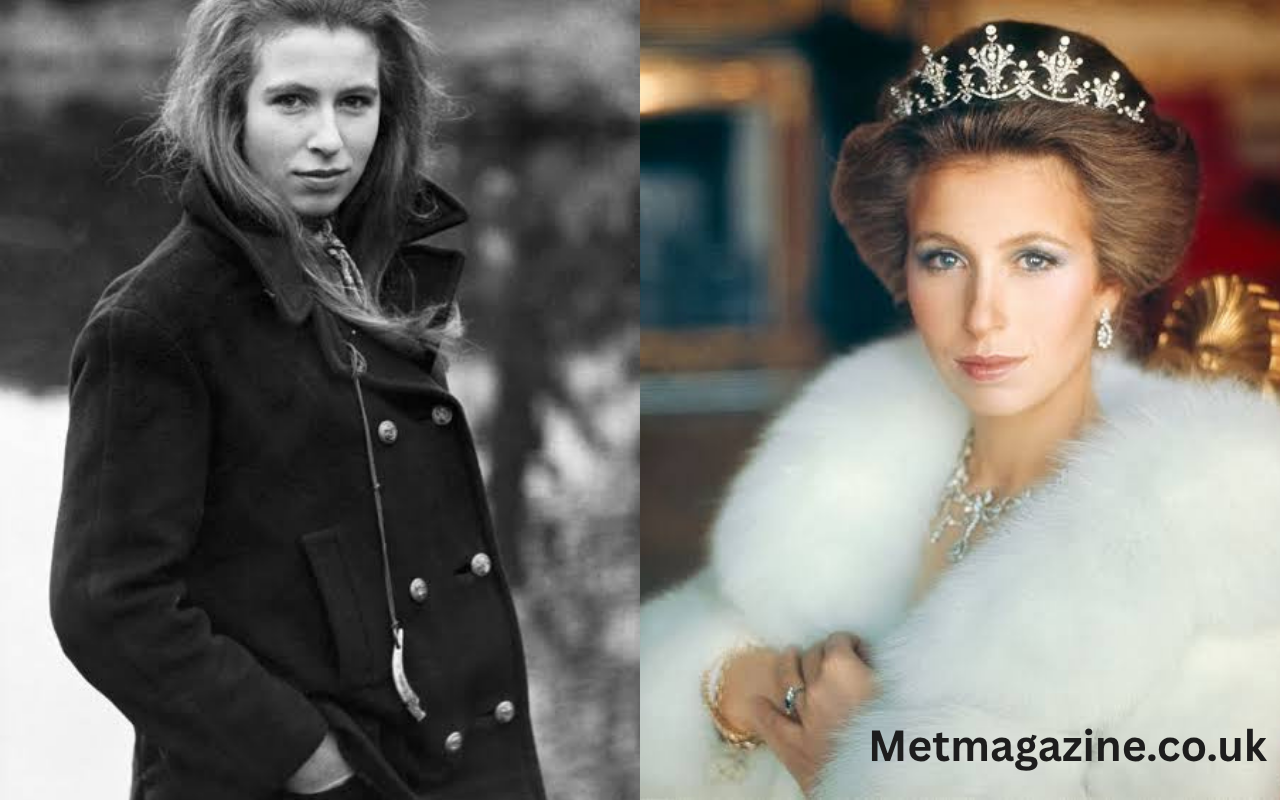
There is something especially fascinating about looking at Princess Anne young because the woman the world knows today was already beginning to emerge in those early years. Long before she became The Princess Royal, one of the most hardworking members of the British Royal Family, Anne was a determined young girl growing up in an extraordinary family, surrounded by horses, public expectations and the traditions of the monarchy. Her childhood was shaped by Queen Elizabeth II and Prince Philip, but her personality developed in a noticeably independent direction.
Born in 1950 as the second child and only daughter of Queen Elizabeth II and Prince Philip, Anne grew up during a period when the British monarchy itself was undergoing enormous change. Her mother became Queen when Anne was only two, transforming the family’s private world into one of constant constitutional responsibility and public attention. Yet Anne’s own path was never simply defined by her position as a princess. Her passion for horses eventually became a serious sporting career, taking her to European championships and the 1976 Montreal Olympics.
What makes Anne’s biography particularly compelling is the continuity between her youth and her later life. The discipline she developed through riding, the independence visible in her teenage years and the sense of duty instilled by her parents all became defining elements of her adult character. Her story is therefore not simply that of a royal princess but of a woman who gradually built an identity through sport, public service, charitable work and decades of commitment.
Princess Anne Young: Childhood and Royal Family Background
Princess Anne was born Anne Elizabeth Alice Louise on 15 August 1950 at Clarence House in London. At the time of her birth, her mother was still Princess Elizabeth, the elder daughter of King George VI, and her father was Prince Philip, Duke of Edinburgh. Anne was the couple’s second child, arriving approximately two years after her older brother, Charles.
Her arrival was a major national event. A 21-gun salute was fired in Hyde Park to announce her birth, and she was baptised at Buckingham Palace in October 1950. Her early years were spent within a close-knit royal household, although that environment was about to change dramatically. When King George VI died in February 1952, Anne’s mother became Queen Elizabeth II, making the young Anne the daughter of Britain’s new monarch.
Growing up as the daughter of a reigning queen meant that Anne experienced an unusual combination of privilege and responsibility. She was raised alongside Charles and, later, her younger brothers Andrew and Edward. The family travelled, attended royal ceremonies and lived under intense public observation, but Anne also developed interests that gave her a life beyond ceremonial appearances. Horses became particularly important, eventually becoming one of the central themes of her youth.
Princess Anne’s Parents and Siblings
Anne’s relationship with her parents played a major role in shaping her character. Queen Elizabeth II was known for her extraordinary dedication to constitutional duty, while Prince Philip brought a more energetic, sporting and practical influence to family life. Anne inherited qualities associated with both. Her later reputation for hard work and straightforwardness has often been viewed alongside the example set by her parents.
Her older brother, King Charles III, was born in 1948, making him approximately two years older than Anne. The siblings experienced the transition from ordinary royal children to the children of a reigning monarch together. Later, Prince Andrew and Prince Edward joined the family, creating the four-sibling group familiar to generations of royal watchers.
Anne’s position as the only daughter also gave her a distinctive place within the family. However, she did not appear interested in allowing that status to become the entirety of her identity. Her sporting interests gave her something that was personally challenging and measurable. Instead of simply being celebrated as a royal, she became an accomplished competitor in her own right.
Education and the Young Princess Anne
One of the most interesting aspects of Princess Anne’s youth was her education. She initially received her schooling at Buckingham Palace, which was typical of royal children of her generation. However, her educational experience changed significantly when she joined Benenden School in Kent in 1963, at the age of 13.
Anne was among the first members of the modern Royal Family to attend a conventional school rather than receiving her entire education within the palace environment. She became a boarder at Benenden, giving her an opportunity to experience school life alongside other young people rather than remaining entirely within the protected world of the royal household.
Her academic education also included A-levels in History and Geography. The Royal Family notes that she was part of the first generation of royals to take and pass A-level examinations. This period was important because it marked a gradual movement toward greater independence, preparing Anne for a future in which she would have to manage both royal expectations and her own interests.
Princess Anne Young and Her Love of Horses
For anyone researching Princess Anne young, her relationship with horses is impossible to overlook. Riding became far more than a childhood pastime. It gave Anne a competitive outlet and eventually developed into an international sporting career.
Her mother, Queen Elizabeth II, was herself deeply interested in horses, and Anne grew up surrounded by the royal family’s equestrian traditions. But Anne’s achievements went beyond simply sharing a family interest. She trained seriously, competed regularly and developed the skill and confidence required for demanding eventing competitions.
The Royal Family describes Anne as an expert horsewoman and records her participation in events such as the Horse of the Year Show. Her dedication to equestrian sport eventually placed her among Britain’s elite riders and gave her an identity separate from her royal position.
Princess Anne’s Historic 1971 European Championship Victory
One of the defining moments of Anne’s young adulthood came in 1971, when she was just 21 years old. Riding her thoroughbred Doublet, a horse gifted to her by Queen Elizabeth II, Anne won individual gold at the European Eventing Championships.
The victory was particularly significant because it established Anne as a genuine elite athlete. Her achievement could not simply be attributed to royal status. Eventing requires a demanding combination of dressage, cross-country and show jumping, meaning competitors must demonstrate technical skill, physical control, stamina and an extraordinary relationship with their horse.
Her success also brought major public recognition. Anne was voted the BBC Sports Personality of the Year in 1971, an unusual honour for a member of the Royal Family. The award demonstrated that the British public could see her not only as Princess Anne but as a successful sportswoman.
Princess Anne and the 1976 Montreal Olympics
Perhaps the most famous chapter of Princess Anne’s equestrian career was her appearance at the 1976 Montreal Olympic Games. Anne became the first member of the British Royal Family to compete in an Olympic Games, riding the Queen’s horse, Goodwill, as part of the British equestrian team.
The achievement was remarkable because Anne entered the Olympics as a genuine competitor. Her presence was not simply ceremonial. She had qualified through her sporting ability and joined Britain’s Three-Day Event team alongside other elite riders.
Although she did not win an Olympic medal, her participation remains one of the most memorable sporting achievements by a British royal. It also demonstrated a characteristic that would continue throughout her life: Anne was willing to place herself in demanding situations where success could not be guaranteed simply because she was a princess.
Princess Anne’s Sporting Achievements
The Montreal Olympics were only one part of Anne’s successful equestrian career. In 1975, before the Olympics, she had already won silver medals in both the individual and team disciplines at the European Eventing Championships. These achievements followed her European individual gold medal from 1971.
Her involvement with equestrian sport continued even after her competitive career changed direction. From 1986 to 1994, Anne served as president of the Fédération Équestre Internationale, the international governing body for equestrian sports. Her sporting expertise therefore became part of her wider public service.
Anne’s influence on equestrianism also continued through her family. Her daughter Zara Tindall became a successful event rider and won an Olympic silver medal in team eventing at the 2012 London Games. That achievement created a remarkable sporting connection between mother and daughter.
Princess Anne Begins Her Royal Career
Although Anne was known publicly from childhood, her official working life began in earnest when she was 18. In 1969, her first public engagement involved opening an educational and training centre in Shropshire. This marked the beginning of a professional royal career that would eventually span more than five decades.
The transition from young princess to working royal happened gradually. Anne’s sporting commitments gave her an identity of her own, while her official duties introduced her to the responsibilities that came with being part of the monarchy.
Over time, royal service became the dominant part of her public life. Rather than relying on a handful of major appearances, Anne developed relationships with organisations and charities over many years. That long-term approach eventually became one of the defining characteristics of her career.
Princess Anne and Save the Children
Charitable work has been central to Anne’s public identity since the beginning of her adult career. In 1970, she became President of Save the Children UK, the first major charity with which she became closely associated. Her involvement exposed her to children’s welfare issues and development challenges across different parts of the world.
Her relationship with the organisation has lasted for decades. Anne has travelled to countries including China, Cambodia, Botswana, Madagascar and the Philippines to visit projects and learn about the issues affecting children and families.
This long-term commitment illustrates an important difference between Anne’s public role and the modern celebrity model of charity work. She has generally focused on maintaining sustained relationships with organisations rather than simply appearing at occasional fundraising events. Her reputation has consequently been built through consistency.
Princess Anne’s Wider Charity Work and Patronages
Beyond Save the Children, Anne has supported an enormous range of organisations. The Royal Family states that she has been involved with more than 300 charities, organisations and military regiments in Britain and overseas.
Her interests cover healthcare, disability, education, sport, international development and community service. She has played important roles with organisations including Riders for the Disabled, Transaid and Riders for Health.
Her connection with disability riding is especially appropriate given her own equestrian background. The Royal Family notes that she became patron of Riding for the Disabled in 1971 and president in 1985. Her involvement demonstrates how personal interests can become meaningful forms of public service.
Princess Anne Becomes The Princess Royal
For much of her life, the public knew her simply as Princess Anne. That changed in June 1987, when Queen Elizabeth II gave her the title The Princess Royal. The title is traditionally granted to the monarch’s eldest daughter and is held for life.
Anne became the seventh Princess Royal in British history. The title suited the role she had already developed: an experienced working royal with a strong commitment to official engagements and charitable causes.
Importantly, the title did not represent the beginning of her public service. By 1987, Anne had already been working for nearly two decades, competed at the Olympics, won European championship medals and established major charitable relationships. Becoming The Princess Royal was therefore a recognition of a career already well underway.
Princess Anne’s Marriage, Children and Family Life
Anne married Captain Mark Phillips at Westminster Abbey on 14 November 1973. Their wedding was watched by an enormous international television audience and became one of the major royal occasions of the 1970s.
The couple had two children: Peter Phillips, born in 1977, and Zara Phillips, born in 1981. Anne’s children were raised with a comparatively different relationship to royal life because neither received a royal title.
Her marriage to Mark Phillips was eventually dissolved in April 1992. Later that year, Anne married Commander Timothy Laurence, who is now known as Vice Admiral Sir Timothy Laurence. They married on 12 December 1992.
Princess Anne as a Mother and Grandmother
Family has remained an important part of Anne’s life, even though her public responsibilities have frequently placed her in the spotlight. Her children have pursued their own careers, with Zara in particular continuing the family’s strong equestrian tradition.
Zara Tindall’s Olympic success in London in 2012 created a particularly memorable moment for Anne. Zara won silver in team eventing, becoming the first British royal family member to win an Olympic medal. The achievement created a direct sporting link between Anne’s Olympic career and her daughter’s.
Anne is also a grandmother. Her grandchildren include Savannah and Isla Phillips, and Mia, Lena and Lucas Tindall. The continuation of family life across generations has added another dimension to her role beyond her official responsibilities.
Princess Anne’s Personality and Work Ethic
Anne’s personality has long been associated with independence, practicality and determination. Those qualities can be traced back to her youth, particularly through her commitment to competitive riding and her willingness to build a public role based on work rather than glamour.
Her working schedule is another major part of her reputation. The Royal Family describes her as having one of the busiest schedules of any member of the Royal Family. She remains involved with hundreds of organisations and regularly travels around Britain and overseas.
That work ethic has helped make Anne one of the monarchy’s most dependable representatives. She supports the King at ceremonial occasions, carries out investitures, attends charitable events and represents Britain abroad. Her influence is therefore closely connected to reliability and longevity.
Princess Anne and the Olympic Movement
Anne’s relationship with the Olympics did not end after Montreal. Her experience as an athlete gave her a natural connection with the Olympic movement, and she later became a member of the International Olympic Committee.
The Royal Family records that she was appointed an IOC member in 1988. She has subsequently held several responsibilities within the organisation and continued to attend Olympic Games in various official capacities.
She has also served as President of the British Olympic Association and supported British athletes at major international competitions. Her Olympic involvement therefore evolved from competitor to administrator and ambassador, giving her a rare perspective across multiple generations of sport.
Princess Anne’s Public Duties Today
Anne’s role as The Princess Royal involves supporting the monarch in Britain and overseas. She attends national ceremonies, represents the King at events, conducts investitures and maintains relationships with charities and organisations.
Her overseas responsibilities have also been extensive. The Royal Family notes that she undertakes international tours and visits connected with both official British interests and her charitable work. She has represented Britain in countries across Europe, Asia, Africa and the Commonwealth.
This modern role is a natural extension of the work she began as a teenager. The young princess who first opened an educational centre in Shropshire in 1969 eventually became an experienced international representative with decades of knowledge about diplomacy, charity and public service.
Princess Anne’s Social Media and Public Image
People searching for Princess Anne Instagram or Princess Anne Twitter may be surprised to discover that she does not have the type of prominent personal social-media presence associated with some younger royals. Her public activities are instead communicated through official Royal Family channels and traditional media coverage.
That absence is consistent with her personality. Anne has never appeared particularly interested in turning her private life into a digital brand. Her reputation has been created through personal appearances, charitable commitments and official responsibilities rather than social-media engagement.
In an age when public figures can reach millions through a single Instagram post, Anne represents an alternative model of influence. Her public profile has been built slowly over decades, with the emphasis placed on service and action rather than online popularity.
Princess Anne’s Legacy as a Royal and Sportswoman
Princess Anne’s legacy is unusually broad because it combines several different identities. She was a successful equestrian athlete, an Olympic competitor, an international sports administrator, a senior working royal and a long-standing charity patron.
Her sporting achievements are particularly important because they changed the perception of what a member of the Royal Family could accomplish. She did not simply attend sporting events as a royal guest; she competed herself at the highest international level.
Her charitable record is equally significant. Decades of involvement with organisations such as Save the Children and Riding for the Disabled have demonstrated a commitment to causes that extend far beyond royal ceremony.
Why Princess Anne Young Still Fascinates People
The continuing interest in Princess Anne young comes partly from the contrast between the photographs of the young princess and the experienced woman she eventually became. Looking back at Anne as a child, teenager or young athlete reveals the gradual development of a personality that remained remarkably consistent.
She was born into one of the world’s most famous families, but her achievements were not limited to being the daughter of a monarch. Her equestrian career provided an area where discipline and talent mattered, and her later charitable work gave her a way to turn her public position into practical service.
Her journey also demonstrates how identity can develop within extraordinary circumstances. Anne inherited a royal title and enormous expectations, but she built her reputation through personal choices—choosing sport, choosing long-term charity involvement and choosing to remain deeply engaged in public responsibilities.
Conclusion: The Lasting Story of Princess Anne
The story of Princess Anne young is ultimately the story of a determined girl who grew into one of the most experienced and hardworking members of the British Royal Family. From her childhood at Buckingham Palace and education at Benenden to her European championship victory and historic appearance at the Montreal Olympics, her youth established many of the qualities that would define her later life.
As The Princess Royal, Anne has continued that journey through decades of public service. Her commitment to Save the Children, equestrian organisations, disability charities, the Olympic movement and hundreds of other causes has created a legacy based on persistence rather than publicity.
Perhaps the most meaningful lesson from Anne’s life is that lasting influence does not always require constant attention. Her career demonstrates the value of showing up repeatedly, developing genuine expertise and remaining committed to responsibilities even when public interest moves elsewhere.
Princess Anne’s journey from young royal and championship rider to The Princess Royal stands as a reminder that perseverance, discipline and purpose can transform opportunity into meaningful service. Her legacy is not simply inherited from the monarchy; it has been strengthened through decades of work, commitment and personal determination.
