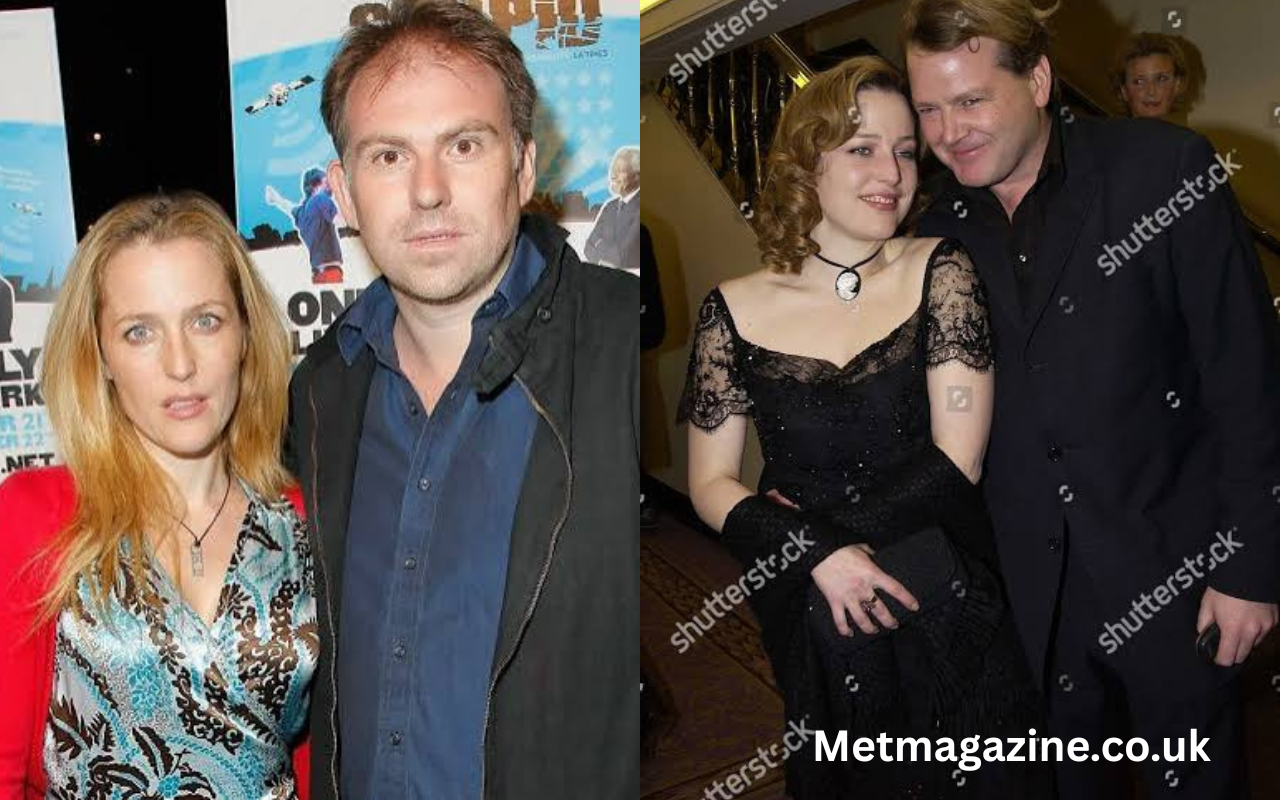
Julian Ozanne is a name that has appeared in very different worlds: international journalism, documentary filmmaking, African business and celebrity news. Although many people first encounter his name because of his former marriage to actress Gillian Anderson, his professional story is considerably broader. Ozanne developed a career built around international reporting, documentary storytelling and investment in African forestry, with professional experience that took him across numerous countries and into subjects ranging from politics and economics to culture and environmental development. His background as a London School of Economics graduate and former Financial Times journalist gives his career a distinctly international character, while his later work in filmmaking and forestry shows an individual willing to move beyond one profession and repeatedly reinvent himself. His own current Substack biography describes him as a former Financial Times journalist who reported from more than 50 countries across Africa and the Middle East and who is now based between London and Cape Town.
The details of Ozanne’s life are not as extensively documented as those of the celebrities with whom he has been associated. That makes separating established facts from repeated internet claims particularly important. Official UK corporate records confirm that Julian Michael Morris Ozanne was born in November 1964, is British, and has held directorships connected with the New Forests Company. Other biographical sources describe him as being born in Kenya and raised in Southern Africa, while older professional material emphasizes his extensive knowledge of African politics, business and society.
What makes Julian Ozanne particularly interesting is the unusual combination of skills represented by his career. Journalism gave him the ability to investigate complex subjects and operate in unfamiliar environments. Documentary filmmaking allowed him to turn real-world stories into visual narratives. His later business activities required a different kind of leadership, involving investment, corporate strategy, forestry and relationships with communities. Seen together, these chapters create a biography that is much richer than the simple celebrity association that often dominates searches for his name.
Julian Ozanne Quick Facts
| Fact | Details |
|---|---|
| Full name | Julian Michael Morris Ozanne |
| Known as | Julian Ozanne |
| Date of birth | November 1964 |
| Age | 61 as of August 2026 |
| Birthplace | Kenya, according to biographical sources |
| Nationality | British |
| Education | London School of Economics |
| Degree | Economics degree, completed in 1986 |
| Profession | Journalist, documentary filmmaker, producer, entrepreneur |
| Former employer | Financial Times |
| Journalism period | 1987–1997 |
| Known for | International journalism, documentary filmmaking and African forestry ventures |
| Former spouse | Gillian Anderson |
| Marriage | 2004–2006/2007 |
| Children with Gillian Anderson | None |
| Business association | New Forests Company |
| Current public writing | Julian Ozanne Substack |
| Reported base | London and Cape Town |
| Estimated net worth | No independently verified current figure |
| No reliably verified official account located | |
| X/Twitter | No reliably verified official account located |
| No reliably verified public profile located |
The age above is calculated from the November 1964 birth information recorded by UK Companies House. This is more reliable than several secondary celebrity websites that give slightly different birth years. Companies House records also confirm his British nationality and historical directorships.
Early Life and African Background
Julian Ozanne was born in Kenya and developed a deep connection with Africa that would eventually become one of the defining threads of his professional life. Older biographical material describes him as having been raised in Southern Africa and as having developed knowledge of African languages and societies. SourceWatch, drawing on historical company-board information, describes him as being born in Kenya, raised in Southern Africa and possessing long-standing political and personal links with Africa.
That background is significant because Ozanne’s later career repeatedly returned to African affairs. His journalism took him across Africa and the Middle East, while his business career eventually became closely connected with forestry operations in countries including Uganda, Tanzania and Mozambique. In other words, Africa was not simply an early setting in his biography; it became a recurring geographical and professional focus.
Public information about his parents, siblings and family circumstances during childhood is comparatively scarce. A number of websites repeat claims about his upbringing, but not all of those details can be independently confirmed through authoritative records. A responsible account of Julian Ozanne’s early life therefore has to distinguish between the broad facts that are consistently reported and more colorful claims that lack strong documentation. What is clear is that his early exposure to Africa became highly relevant to the career he later built.
Education at the London School of Economics
Education was an important foundation for Ozanne’s professional direction. He graduated from the London School of Economics in 1986 with an economics degree, according to professional and corporate sources. His academic training gave him a strong grounding in economics and international affairs, disciplines that would prove useful throughout his subsequent career.
An economics education is especially relevant when considering his eventual move between journalism and business. International reporting often requires an understanding of markets, government policy, trade, investment and political risk. Those subjects would later become even more important when Ozanne became involved in African forestry and investment.
His academic background also helps explain why his career did not remain confined to traditional journalism. Instead, he developed professionally at the intersection of economics, politics, media and international business. The combination of education and field experience allowed him to operate in environments where understanding both people and institutions was essential.
Journalism Career at the Financial Times
After graduating from the London School of Economics, Ozanne entered journalism and spent a significant part of the next decade working for the Financial Times. Professional records identify his period with the Financial Times Group as running from 1987 to 1997. Older biographical material describes him as a foreign correspondent who worked as a Middle East correspondent and Africa bureau chief.
This was a demanding career path. International correspondents have to understand rapidly changing political situations, verify information under pressure and communicate complicated events to readers who may have little direct knowledge of the region being covered. Reporting from Africa and the Middle East would also have required extensive travel and the ability to build relationships with political, business and community figures.
Ozanne’s own current Substack biography gives an indication of the scale of this experience, stating that he reported from more than 50 countries across Africa and the Middle East. That description provides useful context for understanding why Africa later became such a strong theme in his business and writing activities.
International Affairs and Political Risk
Ozanne’s career was not limited to newspaper reporting. Historical professional biographies state that between 1994 and 1999 he also advised US and European investment banks on business and political risk in Africa and worked with the World Economic Forum. This phase is important because it shows how his journalism background evolved into a broader understanding of international investment and corporate decision-making.
Political-risk analysis requires a different perspective from conventional reporting. Instead of simply explaining what has happened, advisers must assess what political, economic or social developments could mean for businesses and investors. Ozanne’s experience reporting from African countries would have provided him with practical knowledge that could be applied to these questions.
This period also helps explain the later transition into entrepreneurship. His career gradually moved from observing and analyzing international business to participating directly in commercial ventures. The progression was therefore not as abrupt as it may appear at first glance: journalism, political-risk analysis and investment were connected by his long-standing focus on Africa and international affairs.
Julian Ozanne and Documentary Filmmaking
After years in journalism, Ozanne expanded into documentary filmmaking and production. His filmography includes work as a producer and director, demonstrating that his interest in storytelling extended beyond newspaper reporting. Moving into film gave him the opportunity to combine research, interviews, visual storytelling and narrative structure in a different medium.
One of the projects associated with his filmmaking career was This Is Not an Exit: The Fictional World of Bret Easton Ellis. The documentary focused on the American novelist Bret Easton Ellis and reflected Ozanne’s ability to move from international affairs into literary and cultural subjects. His filmmaking career therefore broadened the range of subjects he explored.
His documentary credits also include Giorgio Armani: A Man for All Seasons and Here to Where. These projects illustrate another dimension of his professional personality: curiosity. Rather than remaining exclusively focused on politics or economics, he explored personalities, fashion, literature and culture through documentary storytelling.
Work as a Producer and Director
Ozanne’s filmmaking career is especially interesting because it grew naturally out of his journalistic background. A successful documentary requires many of the same qualities expected from an experienced reporter: research, source evaluation, interviewing, persistence and the ability to identify the most compelling part of a story. The major difference is that the documentary filmmaker must translate those discoveries into an audiovisual narrative.
His work therefore represents more than a simple career change. It was another form of journalism and storytelling, only expressed through film. His background as an international correspondent would have given him experience dealing with complicated personalities and unfamiliar environments, while filmmaking demanded a strong understanding of pacing, character and visual presentation.
The transition also demonstrated professional adaptability. Many journalists remain in print throughout their careers, while Ozanne moved into film and then later into business. That willingness to take on new professional challenges is one of the clearest patterns running through his biography.
Founding the New Forests Company
One of the most important chapters in Julian Ozanne’s career came when he became involved in the New Forests Company. Historical business records and professional sources identify him as a founder of New Forests Company Holdings and as its chief executive and executive director. MarketScreener states that he founded New Forests Company Holdings in 2004, while UK corporate records show him appointed as a director in March 2006.
The company was created around forestry and timber investment in Africa. Contemporary documentation describes a strategy involving commercial plantations alongside employment and community-development objectives. One historical company document describes the objective of establishing commercially profitable plantations while also providing employment for rural communities and supporting community-oriented development projects.
The business model reflected a growing interest in sustainable forestry and natural-resource investment. The idea was that well-managed plantations could generate commercial returns while providing renewable timber resources and supporting local economic development. This placed Ozanne in a sector where financial investment, environmental management and community relationships were closely interconnected.
African Forestry and Business Leadership
Under Ozanne’s leadership, the New Forests Company developed interests in several African countries. Historical documentation indicates that the group had plantation operations in Uganda, Tanzania and Mozambique, with prospects at one stage for expansion into Rwanda.
His involvement was therefore much more than a passive investment. He was connected with the company’s executive leadership and corporate structure, giving him responsibility in a complex industry where land management, forestry economics, employment and community relations could have long-term consequences. The role represented a significant shift from journalism and filmmaking into corporate entrepreneurship.
The forestry chapter also strengthened the connection between Ozanne’s professional life and his African background. He had spent years reporting on the continent and understanding its political and economic environments. His later decision to build a business there meant that he moved from observing African development to becoming a participant in a major commercial enterprise connected with land and natural resources.
Controversies Surrounding the Forestry Business
A complete biography of Julian Ozanne should not ignore the controversies connected with the New Forests Company. The company’s operations in Uganda became the subject of disputes concerning land, communities and alleged evictions. Oxfam documented allegations from communities affected by the company’s forestry activities, making this a significant part of the historical record surrounding the business.
The controversy illustrates the complexity of large-scale forestry projects in rural regions. Commercial plantations can create employment, infrastructure and investment, but land ownership and community rights can become highly sensitive issues. Different stakeholders may have very different understandings of what constitutes development, compensation and responsible land use.
Historical World Bank documentation also records a dispute-resolution process involving communities and the company. The existence of this process demonstrates that the issues surrounding the forestry venture were serious enough to require structured engagement. Presenting the controversy alongside the company’s stated social and environmental objectives provides a more balanced understanding of Ozanne’s business career rather than reducing it to either praise or criticism.
Marriage to Gillian Anderson
For many people searching for “Julian Ozanne,” his marriage to Gillian Anderson is the most familiar part of his personal biography. Anderson became internationally famous through The X-Files, where she played FBI Special Agent Dana Scully, and her relationship with Ozanne naturally attracted significant media attention.
The couple married in Kenya in December 2004. Anderson’s archived official biography describes their wedding as a private ceremony on Lamu’s Shella Island attended by close family and friends. The choice of Kenya was particularly meaningful given Ozanne’s African background and the couple’s connection to the region.
Their marriage did not last long. Anderson and Ozanne separated in 2006, and later accounts record their divorce in 2007. A current 2026 Times profile of Anderson continues to identify Ozanne as her second husband and describes him as a documentary-maker, confirming the broad public understanding of their relationship.
Personal Life and Privacy
Although his marriage to a major television star placed Ozanne in the celebrity spotlight, he has generally maintained a much lower public profile than Anderson. There is relatively little reliable information about his private daily routine, hobbies or relationships after the marriage. That privacy appears to be deliberate rather than the result of a lack of professional activity.
The absence of extensive personal information also means that many claims found on celebrity websites should be approached cautiously. Public records provide strong evidence about his professional appointments and birth information, while personal details such as private relationships, family dynamics and everyday habits are much less clearly documented.
This distinction is important when discussing someone whose public identity is partly built around association with a celebrity. Ozanne’s career existed independently of Gillian Anderson, and his professional record provides considerably more substance than the short period during which he was in a high-profile marriage.
Net Worth and Income Sources
There is no reliable public source that establishes Julian Ozanne’s exact current net worth. Internet searches may produce specific estimates, but those figures generally lack the financial documentation needed to treat them as verified. A responsible biography should therefore avoid presenting an exact net-worth figure as fact.
His career nevertheless indicates several potential sources of income over the decades. Journalism would have provided professional earnings during his years with the Financial Times, while documentary production and directing created another stream of professional work. His later involvement in forestry companies added an entrepreneurial and investment dimension to his financial career.
His corporate records demonstrate that his business interests were substantial enough to involve directorships and significant influence within forestry-related companies. Companies House records identify him as a former director of New Forests Company Uganda UK Limited and show that he resigned from that role in September 2020.
Social Media and Online Presence
Unlike many modern public figures, Julian Ozanne does not appear to maintain a highly visible celebrity social-media presence. There is no reliably verified Instagram, X/Twitter or LinkedIn account that can confidently be presented as his official profile. This limited social-media footprint is consistent with his generally private approach to public life.
His strongest current online presence appears to be through writing. His Substack profile identifies him directly as Julian Ozanne and describes his background as an LSE graduate and former Financial Times journalist. It also states that he has reported from more than 50 countries across Africa and the Middle East.
The Substack profile provides an interesting glimpse into how he presents himself today. Rather than emphasizing his marriage to Gillian Anderson, the biography focuses on journalism, international experience and geography. His stated connection with both London and Cape Town also reflects the international nature of his career and long-standing relationship with Africa.
Julian Ozanne Today
As of 2026, Julian Ozanne’s public profile remains relatively quiet compared with the period when his marriage to Gillian Anderson attracted celebrity coverage. His current Substack presence provides the clearest recent indication of his professional identity, describing him as a former journalist with extensive reporting experience across Africa and the Middle East and a base between London and Cape Town.
His corporate history also helps establish what can and cannot be said about his present business activities. His directorship with New Forests Company Uganda UK Limited ended in 2020, while UK Companies House records document earlier involvement with New Forests Company Holdings. It would therefore be inaccurate to describe him as currently running those historical companies without more recent evidence.
What remains consistent is his connection with international journalism, Africa and long-form storytelling. His current online writing suggests that the skills developed during his newspaper career continue to influence the way he communicates. Instead of seeking constant celebrity exposure, he appears to have retained a quieter professional identity centered on experience and ideas.
Career Achievements and Professional Legacy
Julian Ozanne’s career cannot easily be summarized by one achievement. His professional record includes a decade with the Financial Times, reporting across numerous countries, advisory work involving African political and business risk, documentary production and leadership within an international forestry venture. Each chapter represents a different form of professional achievement.
His journalism career gave him international credibility and field experience. His documentary work demonstrated his ability to transform research into visual storytelling. His business career demonstrated entrepreneurial ambition and a willingness to operate in a complex industry. Together, these experiences make his biography unusually varied.
There are also important lessons in the complications surrounding his business career. The New Forests Company combined commercial forestry ambitions with stated environmental and community-development goals, but its Ugandan operations also became involved in serious disputes. This reminds readers that large-scale business ventures can create both opportunities and difficult consequences, and that a person’s professional legacy can contain achievements as well as unresolved debates.
What Makes Julian Ozanne’s Story Interesting?
The most compelling part of Julian Ozanne’s story is his ability to cross professional boundaries. He did not remain a newspaper journalist forever, nor did he become permanently identified with filmmaking. Instead, he moved from reporting to political-risk analysis, documentary production and entrepreneurship.
That pattern suggests a personality driven by curiosity and adaptability. International journalism requires people to enter unfamiliar situations and ask difficult questions. Documentary filmmaking requires them to find human stories within those situations. Business leadership requires them to make decisions when outcomes are uncertain. Ozanne’s career has involved all three.
His story also demonstrates why a biography should look beyond celebrity connections. Gillian Anderson is an internationally recognized actress, and their marriage remains an important part of Ozanne’s public history. But the relationship was only one chapter in a professional life that began years earlier and continued after the marriage ended.
Conclusion
Julian Ozanne’s biography is ultimately a story of reinvention. Born in Kenya, educated at the London School of Economics and shaped by extensive experience across Africa and the Middle East, he built his early reputation through international journalism. His time with the Financial Times established the foundation for a career that would later move into documentary filmmaking, political-risk analysis and business leadership.
His marriage to Gillian Anderson brought an entirely different kind of attention, but it does not define the full story. Behind the celebrity headlines was a journalist who had traveled extensively, a filmmaker interested in real-world personalities and an entrepreneur who became deeply involved in African forestry. His professional journey demonstrates how experience in one field can create opportunities in another when a person remains willing to learn and adapt.
There is also a valuable lesson in the more complicated chapters of his career. Ambition and innovation can produce meaningful opportunities, but projects involving land, communities and natural resources inevitably carry responsibilities and controversies. Ozanne’s professional history therefore offers a more realistic picture of success: achievement is rarely a perfectly straight line, and a meaningful legacy is shaped by both accomplishments and the challenges encountered along the way.
Today, Julian Ozanne remains a comparatively private figure, but his career continues to stand out for its international reach and unusual range. From newsrooms and documentary sets to African forestry ventures and contemporary writing, his journey has crossed several worlds. As he continues to develop his interests away from the constant glare of celebrity media, his story serves as a reminder that resilience, curiosity and adaptability can create a meaningful professional life—and that sometimes the most interesting legacy is the one built quietly, through decades of experience, change and purposeful work.
