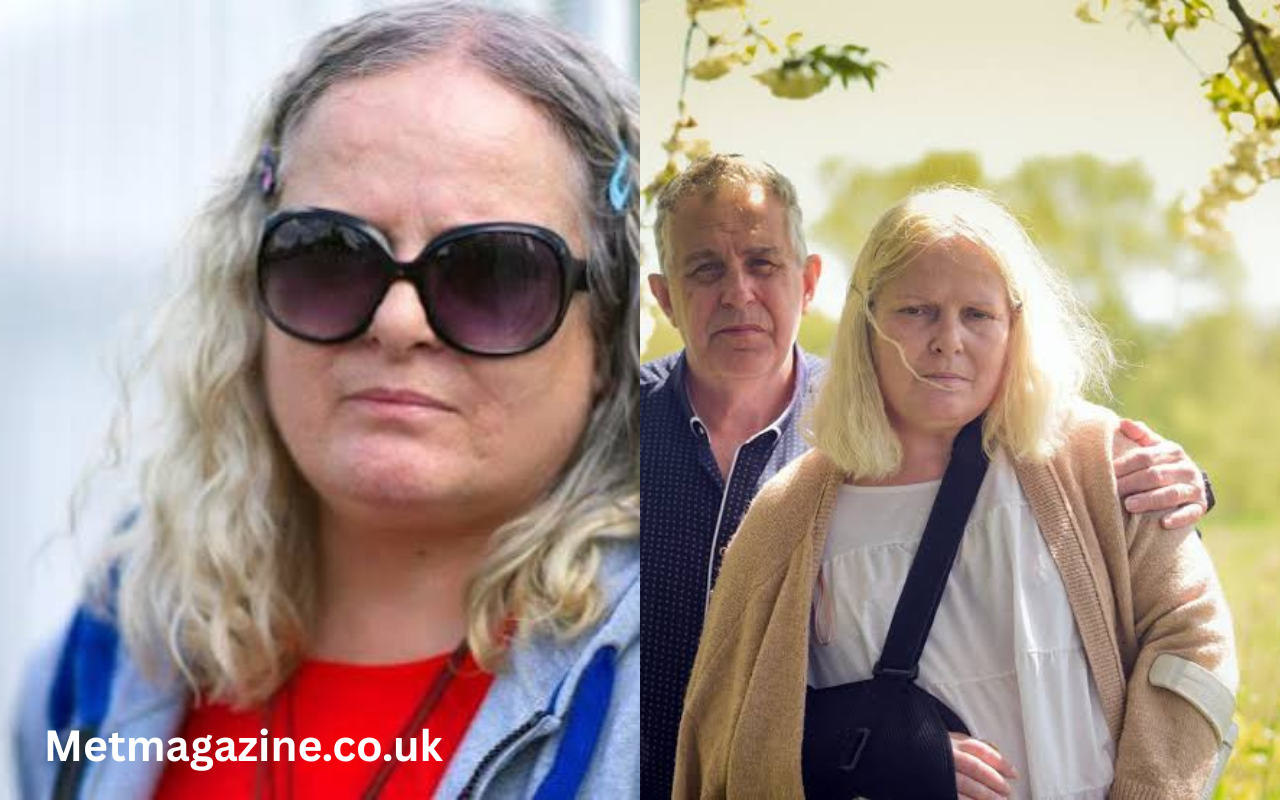
Ruth Neave became known to the British public through one of the most painful and complicated criminal cases of the 1990s. She was the mother of six-year-old Rikki Neave, a young boy whose murder in Peterborough in November 1994 remained unsolved for more than two decades. Ruth herself became the focus of the original investigation, was charged with murdering her son, and was eventually acquitted by a jury in 1996. Yet the acquittal did not remove the suspicion surrounding her name, and she spent years trying to persuade authorities and the public that Rikki’s real killer had never been brought to justice.
Her story took another dramatic turn when the case was reopened decades later. Advances in forensic science, renewed police work and DNA evidence eventually led investigators to James Watson, who had been 13 years old at the time Rikki was killed. Watson was convicted of murder in 2022 and sentenced to life imprisonment with a minimum term of 15 years. The renewed investigation also brought an extraordinary acknowledgement from prosecutors: the decision to charge Ruth with her son’s murder had been wrong.
Ruth Neave’s biography is therefore not a conventional celebrity profile. She does not have a documented entertainment career, business empire or large social-media following. Her public identity developed through tragedy, criminal proceedings, media scrutiny and a decades-long campaign for answers. Her life story remains complicated because she was acquitted of Rikki’s murder but separately convicted of child-cruelty offences, something she has continued to dispute. Understanding those distinctions is essential to telling her story accurately and fairly.
Ruth Neave Quick Facts
| Fact | Details |
|---|---|
| Full name | Ruth Neave |
| Known for | Mother of murdered schoolboy Rikki Neave and campaigner for the reinvestigation of his murder |
| Nationality | British |
| Age | Public reporting described her as 46 in 2016; her exact current age is not reliably documented |
| Birth date | Not reliably documented in authoritative public sources |
| Birthplace | Not reliably documented |
| Profession | Public figure and campaigner through her involvement in the Rikki Neave case |
| Parents | Not reliably documented in authoritative sources |
| Siblings | Not reliably documented |
| Children | Rikki Neave and his siblings |
| Husband | Gary Rogers |
| Education | No reliable detailed public record |
| Net worth | Not publicly known |
| No verified public account reliably identified | |
| X/Twitter | No verified public account reliably identified |
| No verified public professional profile reliably identified | |
| Known documentary | The Murder of Rikki Neave: The Mother’s Story |
| Major public milestone | James Watson convicted of Rikki Neave’s murder in 2022 |
| Current public profile | Primarily associated with Rikki Neave’s case and her campaign for justice |
Because Ruth Neave is a private person whose public profile comes almost entirely from a criminal case, many biographical details commonly published about celebrities simply are not available. There is no dependable public record establishing her exact date of birth, birthplace, parents, education or personal wealth. Similarly, there is no reliably verified Instagram, X/Twitter or LinkedIn account that should be presented as hers without qualification. Giving readers an unknown figure rather than an invented net-worth estimate is the more accurate approach.
The most firmly documented facts concern her relationship to Rikki Neave, the 1996 murder trial, her separate child-cruelty conviction, her later relationship with Gary Rogers and her efforts to reopen the investigation. Contemporary reporting and court documents provide substantially more information about these events than about her private childhood or financial life.
Who Is Ruth Neave?
Ruth Neave is best known as the mother of Rikki Neave and as the woman who spent decades insisting that the investigation into her son’s murder had gone in the wrong direction. When Rikki disappeared in November 1994, Ruth was immediately drawn into the investigation as his mother and later became its principal suspect. The case eventually reached court, where she was acquitted of murder in 1996. That verdict, however, did not end the public controversy surrounding her.
At the same time as her murder acquittal, Ruth was convicted of five child-cruelty offences and sentenced to seven years in prison. The distinction between these proceedings is important. She was not convicted of murdering Rikki, but she did receive a separate conviction relating to the treatment of her children. Ruth later said that she had been advised to plead guilty to the cruelty allegations and disputed the more serious allegations that had been made against her.
For years after her release, Ruth said she lived under the continuing assumption among members of the public that she had somehow escaped punishment for murdering her son. Her determination to change that perception became a major part of her later life. With support from Gary Rogers, she worked through old case files, contacted journalists and pushed police to revisit evidence from the original investigation. That campaign eventually helped lead to the formal reopening of the case.
Ruth Neave’s Early Life and Family Background
Unlike the lives of mainstream celebrities, Ruth Neave’s early years have never been comprehensively documented in authoritative biographies. Most publicly available information about her childhood and family circumstances emerged during or around the criminal proceedings involving Rikki. This means that some descriptions of her early life are based on historical newspaper reporting rather than a detailed autobiographical account.
What is much better documented is the difficult environment surrounding Ruth’s family during Rikki’s childhood. Rikki was known to social services and was considered an at-risk child. The circumstances of the family later became an important part of the original prosecution and also became part of wider questions about whether child-protection authorities had responded appropriately to the problems they encountered.
The 1996 case had consequences beyond Ruth herself. Following the trial, concerns about social-services procedures surrounding Rikki’s welfare became significant enough to attract government attention. The Independent reported at the time that ministers ordered a review of child-protection procedures in Cambridgeshire after Ruth was acquitted of murder but convicted of cruelty. This broader institutional context is an important part of understanding why the Rikki Neave case continued to attract public interest long after the original trial.
The Disappearance and Murder of Rikki Neave
Rikki Neave was six years old when he disappeared on 28 November 1994. He left his home on the Welland Estate in Peterborough that morning but did not arrive at school as expected. He was reported missing later that day. His body was discovered the following day in nearby woodland, and investigators established that he had been strangled.
The circumstances of Rikki’s death immediately created a major murder investigation. His body had been found in woodland close to his home, and investigators began examining the people who knew him and the circumstances surrounding his disappearance. Ruth, as his mother, quickly became central to the investigation, and suspicion eventually focused on her.
For Ruth, the tragedy was followed almost immediately by another devastating experience: instead of being able to grieve privately for her son, she became a criminal suspect. The original investigation eventually led to her being charged with murder. She stood trial in 1996 and was acquitted. Years later, prosecutors and investigators involved in the renewed investigation would acknowledge that the original decision to charge her with murder had been wrong.
The 1996 Murder Trial
Ruth’s 1996 trial became one of the most heavily discussed British criminal cases of its period. The prosecution presented allegations about her treatment of her children and also sought to construct a narrative around her interests and family circumstances. Media coverage was intense, and some newspapers gave her extremely hostile descriptions. Those headlines contributed to a public image that remained attached to Ruth for many years despite the murder acquittal.
The jury ultimately found Ruth not guilty of murdering Rikki. This was a legally significant conclusion, but it was overshadowed in the public imagination by the separate child-cruelty proceedings. Ruth had admitted five cruelty offences and received a seven-year prison sentence. She later maintained that she had misunderstood what she was admitting and said she had been advised by her solicitor to plead guilty to the cruelty allegations.
The historical record therefore contains two separate legal outcomes. Ruth was acquitted of the murder, while being convicted of child cruelty. Later coverage of the Rikki Neave case sometimes revisited both issues simultaneously, making it especially important to avoid suggesting that her murder acquittal automatically cleared her of every allegation concerning her family life. The legal record is more specific than that.
Prison and Life After Her Release
Ruth served her sentence and was released in 2000. According to her later interviews, returning to everyday life was extremely difficult because the public suspicion surrounding Rikki’s murder had not disappeared. She described having to defend herself repeatedly against people who believed she had somehow been responsible for her son’s death.
She also said the case affected her ability to work and damaged her personal relationships. Her account of the years following prison was one of isolation and frustration, particularly because she believed that the actual killer remained free. The emotional burden was not simply the loss of Rikki but also the feeling that her identity had been permanently defined by accusations she said were untrue.
The situation eventually began to change when she met Gary Rogers. Rogers became her husband and an important supporter of her efforts to have Rikki’s murder investigated again. Rather than allowing the case to remain dormant, the couple began examining the old investigation and searching for information that could potentially lead to a new police inquiry.
Ruth Neave and Gary Rogers
Gary Rogers became a crucial figure in Ruth’s later life because he encouraged her to continue seeking justice for Rikki. According to Ruth’s account, when they met in 2008, Rogers told her that he would support her if she wanted to campaign for a fresh investigation. That support became especially important as Ruth confronted the enormous quantity of historical evidence surrounding the case.
In 2013, Rogers helped Ruth obtain the original files from her former solicitor. The material reportedly consisted of 13 boxes containing numerous ring binders of documents. Rogers went through the files in detail and identified what he believed were inconsistencies and missed opportunities within the original investigation. Their work eventually became part of a larger campaign to convince senior police officers that the case deserved renewed scrutiny.
Their partnership became an important element of the cold-case story. Ruth brought the personal experience of being Rikki’s mother and someone who had lived under suspicion, while Rogers approached the evidence from a research and investigative perspective. Together, they kept the case in the public eye and ultimately contributed to the pressure that led to its reopening.
The Fight to Reopen the Rikki Neave Case
Ruth’s campaign became more visible in 2014 when she and Rogers pushed their concerns directly to police officials. They argued that the original investigation had not properly explored alternative possibilities and that important evidence deserved another examination. Their efforts coincided with renewed interest in cold cases and the growing capabilities of forensic science.
In 2015, Cambridgeshire Police reopened the investigation with a new team. Detective Superintendent Paul Fullwood became involved in the renewed inquiry and later described the original case against Ruth as a “fanciful hypothesis.” Investigators also emphasized that Ruth should be treated as the mother of the victim rather than as a suspect in the renewed investigation.
The reinvestigation demonstrated how dramatically forensic technology had changed since 1994. Evidence that had been collected decades earlier could be subjected to modern DNA analysis. Investigators eventually found DNA evidence connecting James Watson to Rikki’s clothing. Watson had been 13 years old when Rikki was murdered, and the discovery became a major breakthrough in the long-running cold case.
DNA Evidence and James Watson
The breakthrough in the case came through forensic testing that had not been available during the original investigation. DNA found on Rikki’s clothing was linked to James Watson, who had been a teenager living in the same broader area at the time. The evidence gave detectives a concrete suspect after decades in which the murder had remained unresolved.
Watson was arrested in 2016, although the legal process did not move immediately to trial. According to reporting, he fled the United Kingdom after his arrest and was eventually extradited from Portugal. He was formally charged with Rikki’s murder in 2020, and the trial finally began in January 2022 after delays including complications connected with the COVID-19 pandemic.
The case eventually reached the Old Bailey, where prosecutors presented DNA and other evidence concerning Watson’s movements and his connection to Rikki. The prosecution argued that Watson had been with Rikki around the time the child disappeared. After a lengthy trial, the jury returned a majority guilty verdict in April 2022, ending one of Britain’s longest-running child-murder mysteries.
James Watson’s Conviction and What It Meant for Ruth
The conviction of James Watson represented an enormous turning point for Ruth Neave. For nearly three decades, her name had been linked to suspicion surrounding Rikki’s murder even though she had been acquitted. The 2022 verdict established that another individual was legally responsible for the killing.
The prosecution also acknowledged that Ruth’s original murder charge had been wrong. Detective Superintendent Paul Fullwood described the earlier case against her as a “fanciful hypothesis,” while prosecutors accepted that the jury had been correct to acquit her. Those statements were particularly significant because they came from authorities involved in reassessing the historical evidence rather than simply from Ruth herself.
For Ruth, however, the conviction did not mean that every painful chapter of her past disappeared. Her separate child-cruelty conviction remained on the record, and she continued to say that she wanted to challenge it. She also described the devastating effect the decades-long case had had on her family, relationships and reputation.
Ruth Neave’s Child-Cruelty Conviction
The child-cruelty conviction is one of the most sensitive parts of Ruth Neave’s story. During the 1996 proceedings, she pleaded guilty to five cruelty charges and was sentenced to seven years in prison. Ruth later disputed the more serious allegations and said that she had been advised to plead guilty, believing she would receive a much less severe punishment.
At the 2022 murder trial, the prosecution continued to refer to what it described as serious mistreatment and neglect of Rikki. Ruth rejected those allegations and maintained her own account of what happened. This creates an important distinction between historical claims, Ruth’s personal account and findings established through the courts.
Ruth and Gary Rogers said in 2022 that they intended to pursue a challenge to the child-cruelty conviction. Public reporting available for this biography does not establish that the conviction was subsequently overturned. It would therefore be inaccurate to describe Ruth as having had all of her previous convictions erased. What can be stated confidently is that her murder conviction never existed: she was acquitted of murdering Rikki in 1996.
Ruth Neave’s Family and Personal Relationships
Ruth’s relationship with her surviving children appears to have been deeply affected by the events surrounding Rikki’s murder and the subsequent legal proceedings. In interviews after James Watson’s conviction, she spoke about being separated from her daughters and missing major moments in their lives. She described the consequences of the case as having effectively destroyed her family relationships.
Her relationship with Gary Rogers became an important source of support. The couple worked together on the Rikki Neave campaign and remained united in their belief that the original investigation had failed to identify the correct suspect. Rogers’ detailed examination of the old case files was an important part of the campaign to reopen the investigation.
Ruth’s public statements also show that grief remains an important part of her identity. In interviews she has spoken warmly about Rikki and remembered him as a beautiful, energetic child. The renewed investigation allowed her to speak about him not simply as the subject of a murder investigation but as her son, whose life was cut short when he was only six years old.
Ruth Neave in Documentaries and the Media
Ruth’s story has been covered by British television, newspapers, radio and documentary productions. Her appearances became especially significant after the investigation was reopened because she could explain her own perspective on the decades of suspicion and her determination to have Rikki’s murder reconsidered.
One notable production was The Murder of Rikki Neave: The Mother’s Story. The documentary gave Ruth an opportunity to discuss the case from her own perspective and explain why she had continued fighting for answers. Her involvement also demonstrated how the story had evolved from a 1990s murder trial into a modern cold-case investigation.
ITV News Anglia also interviewed Ruth extensively around the 2022 conviction and sentencing. Her comments showed how emotionally complicated the moment was. Although she finally saw another person convicted of Rikki’s murder, she also had to confront memories of the original investigation and the years in which she felt she had been treated as the killer.
Ruth Neave’s Net Worth and Sources of Income
There is no reliable public information establishing Ruth Neave’s net worth. She is not known to have built a significant business, entertainment career or professional brand from which a credible financial valuation could be calculated. Consequently, websites that assign her a specific net-worth figure should be approached with considerable caution unless they provide verifiable financial evidence.
Ruth’s public appearances have primarily been connected to the Rikki Neave case. She has participated in interviews and documentaries, but there is no strong evidence that these activities represent a major commercial income source. Her public involvement appears to have been motivated principally by the desire to tell Rikki’s story and seek justice rather than by celebrity or financial ambitions.
A responsible biography should therefore describe Ruth Neave’s net worth as unknown. There is no trustworthy evidence supporting a specific dollar or pound figure. Her financial circumstances are private, and assigning a number would create a false impression of certainty where reliable evidence does not exist.
Ruth Neave’s Social Media Presence
Ruth Neave does not appear to maintain a widely recognized, verified social-media presence comparable with modern celebrities. There is no reliably authenticated Instagram, X/Twitter or LinkedIn account that should be presented as her official profile based on the available evidence.
Her public communication has instead been conducted through traditional media. Interviews with ITV, newspaper features and documentary appearances have provided the main platforms through which she has discussed her life and the campaign surrounding Rikki’s murder. This is particularly relevant because the events that made her publicly known began before social media became a dominant communication tool.
Readers should therefore be careful with social-media accounts using Ruth Neave’s name. Unless an account is independently confirmed through a reputable source, it should not automatically be assumed to belong to her. In a case involving decades of public controversy, separating verified information from online speculation is particularly important.
The Appeal of James Watson’s Conviction
The legal story continued after Watson’s 2022 conviction. He appealed against his murder conviction, and the Court of Appeal considered his arguments in 2023. The judgment confirms that Watson had been convicted on 21 April 2022 and sentenced to detention at His Majesty’s pleasure with a minimum term of 15 years.
The appeal process mattered because it provided another legal examination of the conviction rather than leaving the original trial as the only judicial consideration. The Court of Appeal ultimately rejected the challenge, leaving the conviction in place. This strengthened the finality of the legal resolution surrounding Rikki’s murder.
For Ruth, the continuing legal process meant that the story remained part of her life even after the 2022 verdict. The murder mystery had been solved in court, but the emotional consequences of nearly 30 years of suspicion, family separation and public scrutiny could not disappear with a single judgment.
Where Is Ruth Neave Now?
The most reliable public information places Ruth’s later life primarily around her family, her husband Gary Rogers and the continuing consequences of the Rikki Neave case. There is no well-documented public career that emerged after the 2022 trial, nor is there evidence of a major new business or entertainment venture.
Her most important public objective after Watson’s conviction was reportedly connected to challenging her child-cruelty conviction. Ruth had argued for years that she had been wrongly treated in parts of the original legal process and wanted that aspect of her history reconsidered. The available reporting does not establish a successful overturning of that conviction.
What remains clear is that Rikki’s memory continues to define Ruth’s public story. Her campaign helped bring renewed attention to a murder that had remained unsolved for more than 20 years and ultimately contributed to a reinvestigation that produced a murder conviction. Whatever the future holds for Ruth personally, her name will remain closely associated with the long search for answers surrounding her son’s death.
Ruth Neave’s Legacy and the Lessons From Her Story
Ruth Neave’s legacy is difficult to summarize because her life contains grief, controversy, criminal proceedings, family separation and eventual movement toward legal clarity. She was accused of murdering her son but acquitted. Another man was eventually convicted. At the same time, her separate child-cruelty conviction remains part of the historical record. A truthful account has to hold all of those facts together rather than reducing the story to a simple hero-or-villain narrative.
One of the strongest lessons from the case concerns the importance of distinguishing suspicion from proof. The original investigation concentrated heavily on Ruth, yet decades later the renewed investigation identified James Watson through evidence that had not been available in the same form during the 1990s. Prosecutors later acknowledged that charging Ruth with murder had been wrong.
The story also demonstrates how persistence can influence cold-case investigations. Ruth and Gary Rogers spent years studying the old evidence and pressing authorities to reconsider the case. Their efforts did not produce an immediate breakthrough, but eventually the investigation was reopened, modern forensic techniques were applied and Rikki’s murder was brought back before the courts.
Conclusion
Ruth Neave’s story is ultimately a story of a mother whose life was permanently changed by the murder of her six-year-old son. Rikki Neave’s death in 1994 led to an investigation that first turned toward his mother, leaving Ruth to face a murder trial, a separate child-cruelty conviction and decades of public suspicion. Yet the 1996 jury acquitted her of murdering Rikki, and nearly three decades later the renewed investigation established a very different conclusion.
The conviction of James Watson in 2022 finally answered the central question that had remained unresolved for 27 years. Watson, who had been 13 when Rikki was killed, was convicted after modern forensic evidence and a renewed investigation linked him to the crime. He received a life sentence with a minimum term of 15 years, and his subsequent appeal was rejected.
For Ruth, however, justice cannot simply be measured by the closing of a criminal case. Her own life was shaped by years of suspicion, imprisonment, broken relationships and the struggle to have her son’s murder properly investigated. Her story serves as a reminder that truth can sometimes take an extraordinarily long time to emerge, and that a person’s public identity can be shaped by allegations long after a court has reached its decision.
Ruth Neave’s journey also keeps attention on Rikki himself. Behind the courtroom arguments, forensic evidence and newspaper headlines was a six-year-old boy whose life ended far too soon. The eventual conviction ensured that his murder was no longer officially unsolved. In that sense, Ruth’s decades-long campaign became part of a much larger story about persistence, investigative accountability and the enduring determination to find answers.
As Ruth Neave’s story continues to be remembered, it offers a complicated but powerful lesson about perseverance. Her life demonstrates that public opinion can change, investigations can be revisited and evidence can acquire new meaning as technology advances. Most importantly, the story of Ruth Neave and Rikki Neave is a reminder that behind every long-running criminal case are real people whose lives continue long after the headlines disappear.
