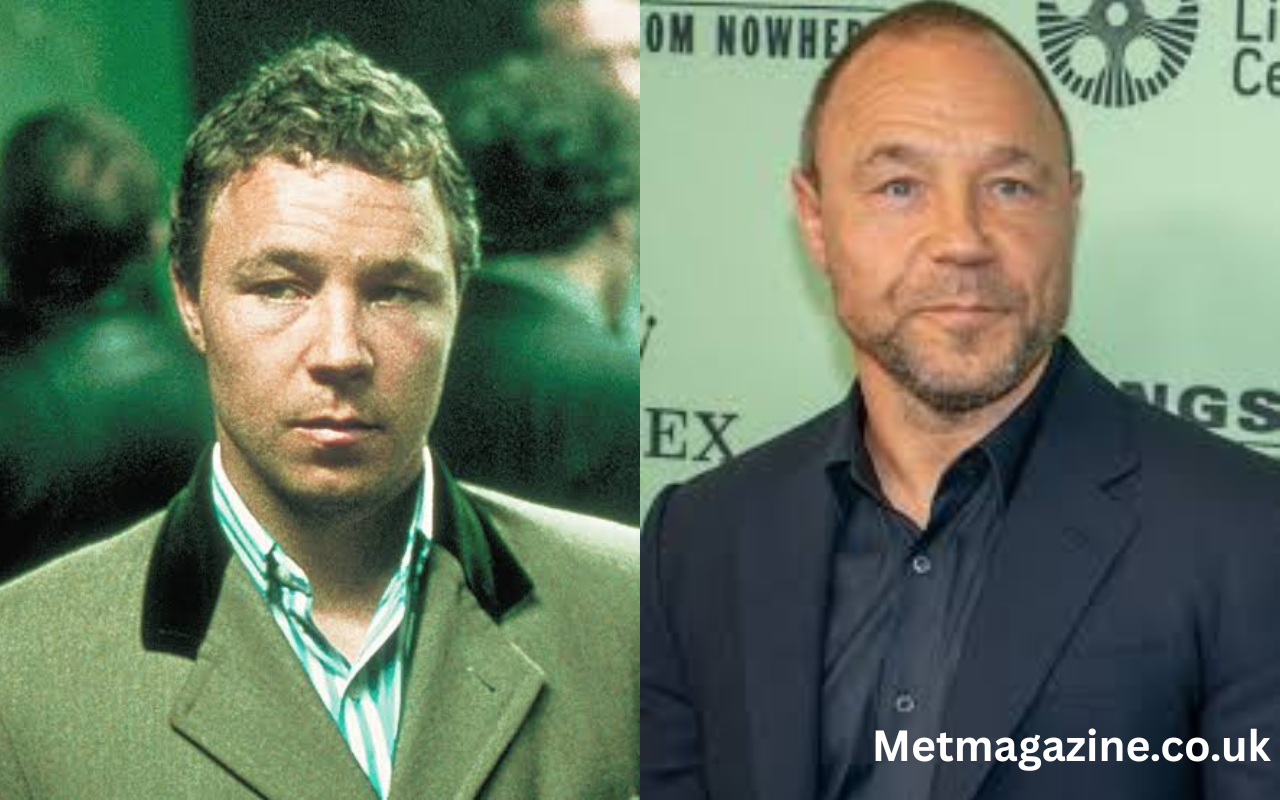
Stephen Graham’s journey from a working-class childhood in Kirkby to becoming one of Britain’s most admired screen actors is a story of talent, persistence and extraordinary versatility. For many international viewers, their first introduction to him came through Guy Ritchie’s Snatch, where Graham played Tommy, the fast-talking, slightly hapless criminal associate at the heart of the film’s chaotic world. The 2000 crime comedy changed the direction of his career, opening opportunities that eventually took him from British television and gritty independent films to Hollywood productions, prestige dramas and award-winning original series. Graham himself has described Snatch as a project that dramatically changed his life and gave him much broader opportunities.
Yet describing Stephen Graham simply as the actor from Snatch would barely scratch the surface of his career. Over more than three decades, he has played gangsters, police officers, historical figures, troubled fathers, criminals, chefs and psychologically complicated men. His work includes This Is England, Boardwalk Empire, The Virtues, Help, Time, Boiling Point, Peaky Blinders and Netflix’s Adolescence. The latter represented a remarkable new chapter because Graham was not only its leading actor but also a co-creator, co-writer and executive producer.
What makes Graham particularly compelling is the authenticity he brings to his performances. His Liverpool roots, working-class upbringing, mixed-race family background and early experiences in British theatre have remained important influences throughout his career. Rather than abandoning those origins after achieving international success, he has repeatedly used them as a foundation for telling stories about ordinary people, social pressure and communities that are often overlooked. His career is therefore not simply a collection of acting credits; it is also a story about representation, resilience and refusing to let early typecasting define an entire professional life.
Stephen Graham’s Early Life and Family Background
Stephen Joseph Graham Kelly was born on August 3, 1973, and was raised in Kirkby, Merseyside, near Liverpool. His upbringing in a working-class community became an important part of the identity he carried into adulthood. Although his professional career would eventually take him around the world, Graham has remained closely associated with Merseyside and has repeatedly spoken about the value of authenticity and being proud of where he came from. His background helped give him an instinctive understanding of the voices, humour, frustrations and ambitions of working-class British communities.
Graham’s family background was also multicultural. His biological father was of Jamaican and Swedish heritage, while his mother and stepfather were important influences during his upbringing. Growing up mixed-race in Liverpool during a period when Britain was experiencing significant racial and social tensions gave Graham a perspective that later informed his understanding of characters living on the margins of society. His experiences did not necessarily make his acting career easy, but they gave him an emotional connection to stories about identity, belonging and class.
Family has remained important to Graham throughout his adult life. He later married actress and producer Hannah Walters, whom he met while studying at Rose Bruford College. The couple eventually became both life and creative partners, building a family together while also developing production projects through their company, Matriarch Productions. Their professional relationship has become increasingly significant as Graham has moved beyond acting into writing, producing and developing stories of his own.
How Stephen Graham Discovered Acting
Graham’s route into acting began surprisingly early. As a child, he appeared in a school production of Treasure Island, playing Jim Hawkins. That experience brought him to the attention of actor Andrew Schofield, who encouraged Graham’s mother to get him involved with Liverpool’s Everyman Theatre. The opportunity introduced him to a professional creative environment at a formative age and helped him understand that acting could potentially become a serious career rather than simply a childhood fascination.
His early professional experience was built through practical work as much as formal education. Graham’s first paid teenage acting job came in the ITV children’s drama Children’s Ward. He subsequently appeared in productions including The Bill, gaining the kind of hands-on experience that he later described as an essential apprenticeship. For Graham, working on actual productions taught him lessons that could not be learned entirely inside a classroom.
He also attended drama school in London, although Graham has been candid about the financial barriers that can affect aspiring actors from working-class backgrounds. He explained that receiving a grant helped make his own training possible. That experience appears to have contributed to his later interest in creating opportunities for people who might otherwise struggle to enter the entertainment industry. His career therefore developed through a combination of formal training, practical experience and a determination to make the most of every opportunity.
Stephen Graham and Guy Ritchie Before Snatch
The story of Stephen Graham and Snatch actually begins several years before the film was made. Graham first worked with Guy Ritchie on The Hard Case, a short film that served as an early calling card for the director. Graham had accompanied a friend to an audition for a small part and had not originally intended to audition himself. Ritchie noticed him, however, and asked him to perform. Graham explained that he was dyslexic and needed time with the script, so Ritchie allowed him to improvise instead. The encounter ended with Graham being offered the job.
That unexpected meeting proved crucial because it established a professional relationship between the young actor and the emerging filmmaker. Ritchie subsequently went on to make Lock, Stock and Two Smoking Barrels, which became a major British crime-film success and established the fast-paced, dialogue-heavy style that would also characterise Snatch. Graham was therefore connected to Ritchie’s filmmaking world before he became an internationally recognised director.
When Ritchie later began assembling the cast of Snatch, he remembered Graham. The actor’s natural Liverpool accent was not initially what Ritchie wanted for Tommy, who was intended to sound like a Londoner. Graham nevertheless demonstrated his ability to perform a convincing Cockney accent during the audition. Ritchie already knew his natural voice and background, but he also recognised that Graham could adapt. That combination of authenticity and versatility became one of the defining characteristics of Graham’s career.
His Breakthrough as Tommy in Snatch
Released in 2000, Snatch became a major milestone in Graham’s professional life. The film mixed British gangster comedy, underground boxing, stolen diamonds and an ensemble cast that included Jason Statham, Vinnie Jones, Benicio del Toro and Brad Pitt. Graham played Tommy, the loyal but frequently overwhelmed associate of Brick Top’s criminal world. While the film was filled with eccentric personalities, Graham made Tommy memorable through physical comedy, timing and a distinctive nervous energy.
Tommy was very different from some of the deeply serious characters Graham would later portray. He was funny, frightened, impulsive and frequently out of his depth. That contrast allowed audiences to see that Graham had a natural gift for comedy as well as drama. His performance also demonstrated how much personality an actor can create in a supporting role when the character has a clear voice, physical identity and relationship with the surrounding cast.
The impact of Snatch on Graham’s career was substantial. He later explained that the movie dramatically changed his life because it gave him much broader professional opportunities. International filmmakers could now see what he was capable of doing, while British directors had a proven performer who could move between comedy, crime and serious drama.
- Snatch introduced Graham to a much wider international audience.
- The role demonstrated his ability to work with accents.
- The film helped him move beyond small television parts.
- It gave him access to increasingly ambitious productions.
Moving Beyond the Snatch Image
One of Graham’s biggest professional challenges after Snatch was avoiding typecasting. Because Tommy was a memorable character in a highly successful British crime movie, it would have been easy for casting directors to repeatedly offer Graham similar roles. Instead, he deliberately developed his accent work and sought characters that required different emotional qualities. He later explained that learning different accents could help open doors and prevent him from being limited to one particular type of character.
His appearance in Martin Scorsese’s Gangs of New York was another important step. Although the part was smaller, working with one of cinema’s most celebrated directors placed Graham in an entirely different creative environment. His later portrayal of Al Capone in Boardwalk Empire was even more significant, giving him the opportunity to play one of American history’s most famous gangsters.
Graham has explained that success in America was never something he consciously planned. Instead, when international opportunities appeared, he took them. Playing Al Capone was especially meaningful because it allowed a young actor from Liverpool to step into a major American television production and work alongside an internationally recognised ensemble. His career consequently developed organically rather than according to a carefully constructed Hollywood strategy.
This Is England and His Transformation as an Actor
If Snatch introduced Graham to a broad audience, This Is England helped establish his reputation as a serious dramatic actor. Shane Meadows’ film gave him the role of Andrew “Combo” Gascoigne, a violent and emotionally unstable skinhead whose worldview is shaped by anger, insecurity and extremist ideology. The character was far removed from Tommy and required Graham to explore a much darker psychological landscape.
Graham has described This Is England as a project where he “grew up” as an actor, saying that it helped him understand the acting process more deeply. Rather than simply presenting Combo as a stereotypical villain, Graham explored the character’s emotional damage and vulnerability. The performance became one of the strongest examples of his ability to make disturbing characters feel recognisably human without excusing their behaviour.
The success of This Is England also strengthened Graham’s relationship with British social realism. The film reflected a tradition of working-class British drama that he had grown up watching. Graham has spoken about his admiration for productions such as Boys from the Blackstuff and the BBC’s Play for Today, which influenced his desire to participate in gritty, character-driven storytelling.
Major Film and Television Roles
Following Snatch and This Is England, Graham built a remarkably diverse filmography. His credits include major productions such as Public Enemies, Pirates of the Caribbean: On Stranger Tides and The Irishman. His ability to blend into ensemble casts while maintaining a distinctive screen presence made him particularly useful to directors working on large productions.
Television became equally important to his career. Boardwalk Empire gave him the opportunity to portray Al Capone, while later productions such as Line of Duty, Time, Help and The Virtues allowed him to explore characters dealing with crime, prison, addiction, trauma and social hardship. His television performances repeatedly demonstrated that Graham was willing to take emotionally demanding roles rather than choosing projects purely for commercial visibility.
His work has also been recognised internationally. Graham has received major acting honours, including an Emmy for his performance in Adolescence, and his career has attracted recognition from organisations ranging from BAFTA to the Golden Globes and Critics Choice Awards. In 2026, he also received a companionship from the Liverpool Institute for Performing Arts, an honour presented by Paul McCartney that had particular resonance given Graham’s Merseyside roots.
Boiling Point and the Challenge of One-Shot Filmmaking
Another defining project in Graham’s career was Boiling Point. The story follows Andy Jones, a chef attempting to manage an increasingly disastrous restaurant service while dealing with pressures in his personal and professional life. The production’s one-shot approach meant Graham had to sustain the character continuously rather than relying on traditional editing to conceal mistakes or provide emotional resets.
The technical demands of the project matched the emotional demands of the character. Graham had to remain immersed in Andy’s rapidly deteriorating situation while interacting with an ensemble cast and navigating a carefully choreographed production. His performance helped turn the film into an intense portrait of workplace pressure, addiction, family strain and professional obsession.
Boiling Point also represented Graham’s growing involvement behind the camera. He became involved as an executive producer, demonstrating that his ambitions were expanding beyond performance. That transition would become even more important with Adolescence, where he took on writing and producing responsibilities as well as the central acting role.
Adolescence and a New Chapter
Adolescence represents one of the most important achievements of Stephen Graham’s career. The Netflix limited series follows Eddie Miller, a father whose teenage son is accused of murdering a female classmate. Graham co-created and co-wrote the series with Jack Thorne and played Eddie, making the project deeply personal from both a creative and performance perspective.
The production used a continuous one-shot format for every episode. Instead of conventional editing between scenes, each episode unfolds as one uninterrupted camera movement. That approach created enormous technical challenges while also making the audience feel as though events were unfolding in real time. Graham’s performance had to carry long stretches of emotional intensity without the traditional breaks available to actors in conventional television.
The result was extraordinary recognition. At the 2025 Emmy Awards, Adolescence won eight Emmys, including Outstanding Limited or Anthology Series, Outstanding Lead Actor for Graham and Outstanding Writing for a Limited or Anthology Series or Movie. Graham therefore became central to the series’ success both in front of and behind the camera.
Awards, Recognition and Industry Impact
Graham’s awards success demonstrates how far his career has travelled since Snatch. The actor who once played Tommy in a fast-paced British gangster comedy eventually became an Emmy-winning performer and writer. His success with Adolescence was particularly significant because the project was not simply an acting vehicle; his creative contributions extended into writing and executive production.
The international response to Adolescence further elevated Graham’s reputation. Netflix reported that the series became one of its biggest English-language successes, while the production’s eight Emmy victories established it as one of the most decorated limited series of the period.
His recognition also reflects the broader influence of his working methods. Graham is known for detailed preparation, accent work and an emphasis on emotional authenticity. He has demonstrated repeatedly that an actor does not need to fit a traditional leading-man image to become a leading performer. His physical presence, voice, background and character instincts have all become assets rather than limitations.
Stephen Graham and Hannah Walters
Stephen Graham’s relationship with Hannah Walters is an important part of his personal and professional story. The pair met while studying acting and eventually married in 2008. Walters is herself an accomplished actress and producer, and their partnership has developed into a creative collaboration as well as a family relationship.
Together they founded Matriarch Productions, giving them a greater opportunity to develop stories they believe deserve to be told. The company has been associated with projects including Boiling Point and Adolescence, demonstrating that the couple’s professional ambitions extend beyond appearing in front of the camera.
Their partnership is particularly significant because Graham’s career increasingly involves decisions about which stories get made and whose voices receive attention. Matriarch Productions allows him and Walters to participate in that process directly. It represents a natural evolution from actor to creative producer and demonstrates that Graham is thinking about his long-term influence within the entertainment industry.
His Personality, Values and Approach to Acting
Despite playing some of cinema and television’s most intimidating characters, Graham’s public personality is notably different. He has frequently spoken about his pride in his Liverpool background and his commitment to authenticity. Rather than attempting to distance himself from his roots, he has used his experiences as a source of understanding when portraying working-class characters.
His approach to accents is another example of his dedication to craft. Graham’s natural Scouse accent is very different from Tommy’s Cockney voice in Snatch or the American accents he has used in other productions. Developing those voices has allowed him to avoid being trapped by geography and has demonstrated his technical range as a performer.
He has also spoken about dyslexia and the challenges he experienced when working with scripts. Instead of allowing those difficulties to stop him, he developed alternative methods and became increasingly confident in improvisation and performance. His early experience with Guy Ritchie, where improvisation helped him secure The Hard Case, is a particularly revealing example of turning a challenge into an advantage.
Stephen Graham’s Net Worth and Career Earnings
Stephen Graham’s exact net worth is not publicly verified. Online celebrity-wealth estimates frequently place his fortune in the multimillion-dollar range, but such figures should be treated cautiously because actors generally do not publish their contracts, investments, property holdings or complete income statements.
His earning power has nevertheless grown significantly over the course of his career. His income comes primarily from acting in film and television, while his work as a producer, writer and executive producer provides additional professional and financial opportunities. The success of projects such as Boiling Point and Adolescence has also increased his value as a creative partner rather than merely a performer.
This diversification may ultimately be one of the most important aspects of Graham’s financial and professional future. Instead of relying entirely on acting roles, he is increasingly involved in developing projects himself. That gives him greater control over his career and allows him to participate in the commercial and creative life of productions from multiple positions.
Stephen Graham’s Social Media and Public Image
Graham maintains a public presence online, although he has never appeared to build his career around social-media celebrity. His public image continues to be driven primarily by his acting work, interviews and the projects he creates. This is consistent with his relatively grounded approach to fame.
When Graham discusses his work publicly, he frequently focuses on the importance of the story rather than personal celebrity. This was especially visible during the promotion of Adolescence, where discussions surrounding the series centred on young people, masculinity, social media, online pressures and violence rather than simply Graham’s own performance.
That distinction is valuable in an era when actors can become almost as famous for their online personalities as their performances. Graham’s career has followed the opposite path: the work comes first, and the public profile follows. His reputation has therefore been built primarily through the quality and consistency of his performances.
Stephen Graham’s Latest Projects in 2026
Stephen Graham entered 2026 following the enormous success of Adolescence, and his career continues to expand. He appears in Peaky Blinders: The Immortal Man, the feature continuation of the acclaimed British crime saga. The film, directed by Tom Harper and written by Steven Knight, includes Graham alongside Cillian Murphy, Rebecca Ferguson, Tim Roth and Barry Keoghan. Netflix confirms that the film is now streaming.
The project is especially notable because Peaky Blinders has become one of the most recognisable British television franchises internationally. Graham’s involvement places him inside another major chapter of contemporary British crime drama. The film moves the Shelby story into a World War II setting, creating a different historical context while retaining the series’ established characters and atmosphere.
His broader upcoming slate also includes Deliver Me From Nowhere and an untitled Apple TV+ project based on Lars Kepler’s novels. His representatives also list additional projects in development or production. These opportunities suggest that Graham’s post-Adolescence career will not simply be about accepting larger acting roles; he is increasingly positioned as a creative force capable of working across acting, writing and production.
The Legacy of Stephen Graham
The most remarkable part of Stephen Graham’s career may be that Snatch is simultaneously one of his most famous roles and only one chapter in a much bigger story. Tommy helped introduce him to a global audience, but the actor refused to allow that early success to become a limitation. Instead, he pursued increasingly difficult roles and demonstrated that he could move between comedy, crime, historical drama and emotionally demanding social realism.
His journey also carries a powerful message about representation. Graham’s working-class and mixed-race background did not disappear when his career became successful. Instead, those experiences became part of the perspective he brought to his work. His continued interest in British social stories and his involvement with Matriarch Productions suggest that he wants to create opportunities for other people from backgrounds that have historically been underrepresented in the entertainment industry.
Today, Stephen Graham stands as an example of what can happen when early opportunity is matched by discipline, curiosity and a refusal to become comfortable. From the unexpected audition that led to The Hard Case, to Tommy in Snatch, Combo in This Is England, Al Capone in Boardwalk Empire, Andy Jones in Boiling Point and Eddie Miller in Adolescence, every stage of his career has added another layer to his reputation. His story shows that a breakthrough can open a door, but lasting success comes from continually developing the craft behind it.
As Stephen Graham continues to build his career in front of and behind the camera, his influence is becoming larger than any individual character. His journey from Kirkby to international award-winning television is a reminder that authenticity can be a strength, working-class stories deserve serious attention, and resilience can turn unexpected opportunities into a remarkable legacy. Snatch may have been the role that changed his life, but the decades of work that followed are what made Stephen Graham one of Britain’s most compelling actors of his generation.
