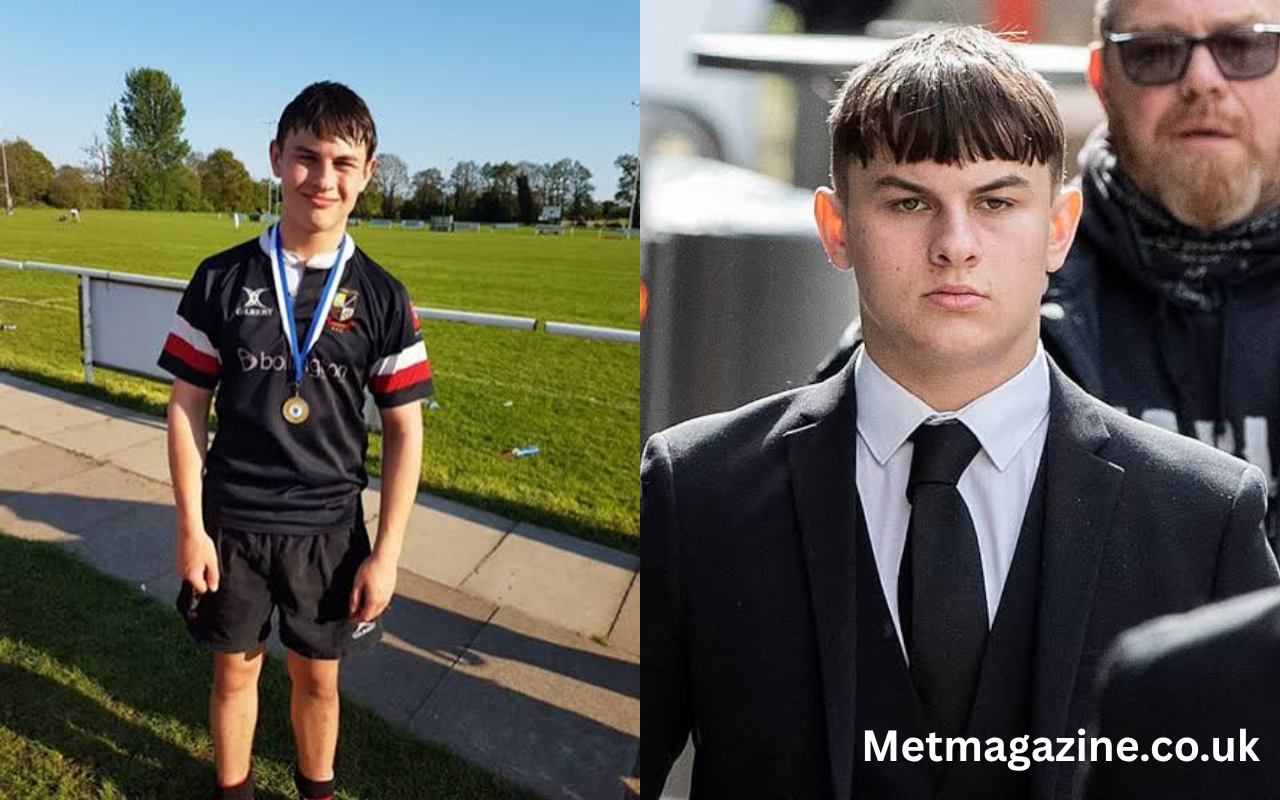
Joshua Molnar is a name that became known across Britain under circumstances few people would ever choose. Unlike celebrities who build public profiles through entertainment, sport or business, Molnar came into the national spotlight as a teenager following the death of his friend Yousef Makki in Hale Barns, Greater Manchester, in March 2019. At the time, both boys were 17, and the events surrounding Makki’s death eventually resulted in a high-profile murder trial, intense media attention and, years later, a second inquest into the circumstances of the fatal stabbing. Molnar’s story has remained controversial because the criminal trial and subsequent inquest produced different findings about what happened that evening.
Before the case transformed his life, Molnar had grown up in a relatively affluent Cheshire environment and had attended several schools, including Cheadle Hulme School and Ellesmere College. He was also an enthusiastic rugby player, competing for school and club teams and participating in representative rugby programmes. His family background was similarly established, with his mother Stephanie Molnar involved in the childcare business and his father Mark Lazlo Molnar working in management consultancy and tennis administration. These details became part of the public record only after the legal proceedings and the lifting of reporting restrictions surrounding his identity.
The public record surrounding Joshua Molnar is complicated, and any biography needs to distinguish between proven facts, evidence presented in court and later conclusions reached by a coroner. In 2019, a Manchester Crown Court jury cleared Molnar of murder and manslaughter after accepting his claim of self-defence. He nevertheless admitted possessing a bladed article and perverting the course of justice after lying to police, offences for which he received a 16-month detention order. In 2023, a second inquest concluded that Yousef Makki had been unlawfully killed and that Molnar had not acted in lawful self-defence.
Joshua Molnar Facts and Personal Details
| Category | Details |
|---|---|
| Full Name | Joshua Molnar |
| Known For | 2019 death of Yousef Makki and subsequent legal proceedings |
| Nationality | British |
| Age | Approximately 24–25 in 2026; exact birth date is not reliably public |
| Birthplace | Not reliably established in public records |
| Raised In | Hale Barns, Greater Manchester |
| Parents | Stephanie Molnar and Mark Lazlo Molnar |
| Sibling | Sister named Lexi Molnar has been reported |
| Education | Hale Preparatory School, Cheadle Hulme School, Ellesmere College and later Wilmslow High School |
| Sport | Rugby union |
| Rugby Club | Altrincham Kersal RUFC |
| Known Legal Outcome | Acquitted of murder and manslaughter; convicted of possessing a knife and perverting the course of justice |
| Net Worth | Not reliably established |
| Profession | No reliably documented current profession |
| No verified public account reliably established | |
| X/Twitter | No verified public account reliably established |
| No verified personal profile reliably established |
Early Life and Family Background
Joshua Molnar was raised in Hale Barns, an affluent village near Altrincham in Greater Manchester. Contemporary reporting portrayed the area as a prosperous community associated with professional families, expensive homes and, in some cases, well-known footballers and other public figures. His upbringing was therefore very different from that of Yousef Makki, who grew up in Burnage in south Manchester and attended Manchester Grammar School on a scholarship. The contrast between the two boys’ backgrounds later became an important part of public discussion surrounding the case.
Molnar’s mother, Stephanie Molnar, had an established professional background. Reports published after the trial described her as having studied biology and business before working in scientific software and marketing. In 2001, she co-founded the Elmscot Group, a childcare business operating nurseries and out-of-school clubs in Cheshire. Her work was reportedly inspired partly by her own experience as a working mother trying to find suitable childcare for her children. His father, Mark Lazlo Molnar, was described as a management consultant and was also involved in tennis administration in Cheshire.
His parents separated when Joshua was around 13, according to reporting from the period when his identity became public. His family circumstances, education and teenage behaviour subsequently became part of media coverage, although it is important not to assume that every private detail reported about a family automatically explains an individual’s later choices. What is clear from the available record is that Molnar grew up with access to substantial educational opportunities and a family environment that had considerable professional and financial resources.
Education and School Years
Education was a significant part of Molnar’s early biography. He initially attended Hale Preparatory School before moving through other educational settings. Later reporting identified Cheadle Hulme School as one of the schools he attended, followed by Ellesmere College in Shropshire, where he played rugby. He eventually attended Wilmslow High School during his A-level years. His educational journey was therefore not straightforward, with changes of school forming part of his teenage years.
Rugby appears to have been one of the strongest consistent interests during his school years. Molnar played rugby for his schools and for Altrincham Kersal Rugby Football Club. Reporting also stated that he won the Cheshire Cup with an under-16 team and represented Shropshire at county level. He was additionally connected with the Welsh Exiles Programme, which sought to identify promising young rugby players who could potentially qualify to represent Wales while living outside the country.
His sporting ability provides an important glimpse into the teenager he was before the events of 2019. On the rugby field, he was described as a capable and committed young player who had opportunities to develop through established sporting structures. Yet his teenage years also became increasingly complicated, and the legal proceedings later placed significant attention on his friendship group, recreational activities and fascination with knives. Those contrasting elements—sporting ambition on one side and increasingly troubling behaviour on the other—form an important part of understanding his adolescence without reducing his entire childhood to the later criminal case.
Friends, Lifestyle and Teenage Environment
During his teenage years, Molnar became friends with Yousef Makki and Adam Chowdhary. The three teenagers spent time together in Hale Barns and were described in court and subsequent reporting as a friendship group whose activities included cycling, socialising and smoking cannabis. Makki had come from a different socioeconomic background but had earned a scholarship to Manchester Grammar School, where he was regarded as academically talented and had ambitions of becoming a heart surgeon.
The trial heard evidence about Molnar’s fascination with knives and his interest in drill music and street culture. Reports described the teenagers as using slang and adopting aspects of a gangster-style persona despite Molnar himself coming from a comparatively privileged background. The prosecution case and wider media coverage examined this behaviour closely, while Molnar’s defence focused on the circumstances of the fatal confrontation rather than portraying the teenage lifestyle as proof of an intention to kill.
The distinction is important because youthful bravado and criminal intent are not automatically the same thing. The court ultimately had to decide whether the prosecution had proved murder or manslaughter beyond reasonable doubt, rather than simply whether Molnar had behaved recklessly or irresponsibly beforehand. The jury cleared him of both offences, although he had admitted separate offences involving possession of a knife and lying to police. That combination of findings remains central to any accurate biography of Joshua Molnar.
The Death of Yousef Makki
On March 2, 2019, Yousef Makki was fatally stabbed in Hale Barns. He suffered a stab wound to the chest that penetrated his heart. Joshua Molnar was involved in the confrontation and accepted that he had wielded the flick knife that caused the fatal injury. The circumstances surrounding exactly how the confrontation developed became the central question in the criminal trial and later inquest.
Molnar’s account was that an argument developed between the teenagers and that Makki produced a knife first. He said he then produced his own knife and that Makki moved towards it, resulting in the fatal injury. Molnar maintained that he had acted in self-defence and that the stabbing was not an intentional killing. This account was ultimately sufficient for the Crown Court jury to acquit him of murder and manslaughter.
The death had devastating consequences for Makki’s family. Yousef was remembered by relatives as a kind and ambitious teenager whose future appeared full of possibilities. His family subsequently challenged aspects of the legal process and continued seeking answers about the circumstances of his death. Their efforts eventually resulted in the original inquest being quashed and a fresh inquest being ordered by the High Court.
Joshua Molnar’s 2019 Murder Trial
Molnar’s murder trial took place at Manchester Crown Court in 2019. The prosecution alleged that he had unlawfully killed Makki, while the defence argued that the fatal injury occurred during an act of self-defence. After hearing the evidence, the jury acquitted Molnar of both murder and manslaughter. The verdict meant that he was not criminally convicted of causing Makki’s death.
The acquittal did not, however, mean that Molnar faced no criminal consequences. He admitted possession of a bladed article and admitted perverting the course of justice by lying to police after the stabbing. Those offences resulted in a 16-month detention order. The distinction is significant because later descriptions of Molnar sometimes simplify the case into either complete exoneration or murder, whereas neither description accurately reflects the full legal record.
The trial attracted enormous public attention, partly because of the ages of the teenagers and partly because of their contrasting social backgrounds. Molnar was described as a former private-school pupil from an affluent Cheshire family, while Makki had won a scholarship to Manchester Grammar School. The case subsequently generated wider discussions about youth violence, class, privilege, education and the criminal justice system.
The First Inquest and Its Controversial Conclusion
The legal story did not end with the Crown Court verdict. A later inquest examined the circumstances surrounding Yousef Makki’s death. In November 2021, senior coroner Alison Mutch concluded that the precise circumstances in which Makki had been wounded could not be established on the balance of probabilities. She therefore ruled out both unlawful killing and accidental death in her narrative conclusion.
Makki’s family challenged that conclusion, arguing that the evidence should have allowed the coroner to reach a clearer finding concerning whether the death was unlawful. The family pursued a judicial review, and in January 2023 the High Court quashed the earlier inquest findings and ordered a new hearing before a different coroner. The decision reopened a case that had already remained deeply painful and controversial for several years.
The first inquest is therefore an important part of Molnar’s biography because it demonstrates how the legal interpretation of the case continued to evolve. The original criminal trial had resulted in acquittals for murder and manslaughter, while the first inquest did not determine that the death was unlawful. But the High Court’s intervention meant that the evidence would be reconsidered, creating the possibility of a very different conclusion.
The 2023 Second Inquest
The second inquest took place at Stockport Coroner’s Court in 2023 and examined the evidence surrounding Makki’s death in considerably greater detail. Molnar gave evidence and was questioned about inconsistencies between different accounts he had provided over the years. He acknowledged that he had lied to police after the stabbing and described that behaviour as deeply wrong, explaining that he had panicked and wanted to protect himself.
The second inquest also revisited the central question of self-defence. Molnar maintained that he believed he was defending himself, but the evidence was examined against statements and other material from the time of the incident. The coroner considered differences between Molnar’s accounts at the original trial, the first inquest and the later proceedings. The issue was not simply whether Molnar had carried a knife, which he had already admitted, but whether the fatal use of that knife could properly be regarded as lawful self-defence.
In October 2023, coroner Geraint Williams concluded that Yousef Makki had been unlawfully killed. He found that Makki had not used a knife to threaten or attack Molnar and concluded that the use of the knife was unnecessary, disproportionate and unreasonable. This was a major development in the public record, although it did not overturn the earlier criminal acquittal, because an inquest and a criminal prosecution serve different legal purposes and use different standards of proof.
Joshua Molnar’s Legal History and Public Reputation
The combination of the 2019 trial and 2023 inquest makes Molnar’s legal history unusually complex. The criminal jury found him not guilty of murder and manslaughter, while he was convicted of possessing a knife in public and perverting the course of justice. The later coroner concluded, on the balance of probabilities, that Makki had been unlawfully killed and that Molnar had not acted in lawful self-defence. These findings should be presented together rather than selectively quoting one while ignoring the other.
Molnar’s public reputation was consequently shaped by a combination of media coverage, courtroom evidence and continuing debate. His name became associated with youth knife crime, privilege and the question of how young people from different social backgrounds are treated by society. At the same time, the legal principle of being acquitted of murder and manslaughter remains an important fact that should not be erased simply because a later inquest reached a different conclusion.
The case also demonstrates why biographies involving legal proceedings demand particular care. Public opinion, media narratives and legal findings are not necessarily identical. A person can be acquitted of a criminal charge while still being subject to other convictions or adverse findings in separate proceedings. Joshua Molnar’s story is a clear example of why responsible biography writing should explain those distinctions instead of relying on a single dramatic headline.
Personal Life, Relationships and Family Today
Information about Molnar’s adult personal life is extremely limited. Unlike public figures who actively share their relationships, hobbies and daily routines online, Molnar has largely remained outside mainstream public life since the legal proceedings. There is no reliable body of evidence establishing a current partner, marriage, children or detailed day-to-day lifestyle, and claims made by unsourced biography websites should therefore be treated cautiously.
His family was highly visible during the original legal proceedings. His mother and father supported him through the trial, and reports documented their presence at court. His mother’s business background and his father’s professional career also became public because journalists investigated the circumstances surrounding the teenage defendant. Those details help explain the family environment in which Molnar was raised, but they do not provide reliable evidence about his current relationships or private circumstances.
Today, the most responsible description is that Molnar appears to have maintained a comparatively private life. There is no strong evidence of a public career, celebrity persona or sustained media presence. His name can still appear in searches because of the Makki case, but that continuing visibility should not be confused with active public participation or an established professional identity.
Joshua Molnar’s Career and Professional Life
There is no reliably documented public career for Joshua Molnar that can be described in the same way as the career of an athlete, actor, entrepreneur or media personality. His strongest documented interest before adulthood was rugby, where he played at school, club and representative levels. However, there is no reliable evidence showing that he developed rugby into a professional career following the events of 2019.
His rugby background remains notable because it illustrates that he had genuine sporting opportunities before the case changed the direction of his life. Playing for Altrincham Kersal and participating in representative programmes suggested a degree of athletic ability and commitment. Nevertheless, the available public record does not establish that he later pursued professional sport, coaching, business or another identifiable career path.
For that reason, any website claiming a specific current occupation or employer should be checked against authoritative evidence before being treated as fact. As of the available public record, Molnar’s professional status remains largely private. That uncertainty is preferable to presenting an invented career simply to make a biography appear more complete.
Joshua Molnar Net Worth and Income
Joshua Molnar’s net worth is not publicly established through reliable financial records. Unlike major celebrities or publicly traded-company executives, he has no widely documented professional career, public financial disclosures or verified business portfolio from which a meaningful personal wealth estimate could be calculated. Consequently, online figures claiming that Molnar is worth a particular amount should be viewed with considerable skepticism.
His childhood family circumstances should also not be confused with his personal net worth. Reporting around the 2019 case established that his parents were professionally successful and that the family lived in an affluent area. His mother had been involved in a successful childcare business, while his father had a professional management and tennis background. Those facts describe his family environment, not his personal assets or current income.
A balanced biography therefore lists Joshua Molnar’s current net worth as unknown. There is no credible basis for assigning a precise figure. Similarly, there is no reliable public information establishing a current salary, investment portfolio, business income or other substantial revenue source. Any future estimate would require verifiable information about his employment, assets and financial interests.
Joshua Molnar on Social Media
Joshua Molnar’s social-media presence is another area where caution is necessary. Because his name is not unique, numerous people with the same name can be found on platforms such as Instagram, Facebook, X and LinkedIn. Without an independently verified connection to the person involved in the Makki case, those accounts should not be presented as belonging to him.
Social media did play a role in the wider story surrounding the case, however. During the trial, material involving Molnar and his friends was examined as part of the evidence and subsequently received considerable media attention. Some online material became part of the public conversation surrounding the teenagers’ fascination with knives and street culture.
There is no reliable evidence that Molnar currently operates a major public Instagram account, X profile or LinkedIn presence. Therefore, the safest and most accurate approach is to mark his social-media handles as unavailable or unverified rather than assigning accounts to him based solely on a matching name.
Where Is Joshua Molnar Now?
The last major stage of Molnar’s publicly documented story was the second inquest in 2023. At that time, he was 22 and gave evidence concerning the events that had occurred when he was 17. The proceedings attracted renewed media attention because the coroner ultimately concluded that Makki had been unlawfully killed.
Since then, there has been comparatively little reliable mainstream reporting about Molnar’s personal or professional life. There is no well-established public record showing that he has become a public personality, launched a notable business, returned to competitive rugby or entered another high-profile profession. His relative absence from the media suggests that his adult life has remained largely private.
That lack of information is itself significant. A biography should not turn silence into speculation. Unless Molnar chooses to discuss his life publicly or reliable reporting documents new developments, questions about his current job, relationships, finances and future ambitions should remain unanswered rather than being filled with unsupported claims.
The Wider Lessons From Joshua Molnar’s Story
The story of Joshua Molnar is ultimately about far more than one teenager. It touches on youth violence, knife carrying, social class, privilege, friendship, accountability and the consequences of decisions made during adolescence. The fact that Molnar and Makki came from markedly different backgrounds also prompted wider discussion about inequality and perceptions of young people within the justice system.
Another important lesson comes from the different legal findings. The 2019 criminal jury acquitted Molnar of murder and manslaughter, while a later coroner concluded that Makki had been unlawfully killed. The difference reflects the distinct purposes and evidential standards of criminal trials and inquests. Understanding that distinction is essential to understanding the case accurately rather than treating one legal proceeding as though it automatically erased the findings of another.
Most importantly, the story should not allow the legal controversy to obscure the human tragedy at its center. Yousef Makki was 17 when he died, and his family has continued to live with that loss. Molnar was also only 17 when the events occurred, and his life was permanently altered by the resulting legal proceedings. The case demonstrates how rapidly teenage decisions can produce consequences that extend far beyond the people directly involved.
Conclusion
Joshua Molnar’s biography is unlike that of a conventional public figure. His early life included private education, competitive rugby, a prosperous family environment and opportunities that could have led toward many different futures. Instead, his life became publicly defined by the fatal stabbing of Yousef Makki in 2019 and the complicated legal journey that followed. His criminal trial resulted in acquittals for murder and manslaughter, while separate convictions for knife possession and perverting the course of justice resulted in a 16-month detention order.
The 2023 second inquest added another important chapter. After the High Court ordered a fresh investigation, coroner Geraint Williams concluded that Makki had been unlawfully killed and rejected the argument that Molnar had acted in lawful self-defence. That conclusion did not replace the criminal jury’s verdict, but it became an important part of the historical record surrounding the case.
Ultimately, the most meaningful lesson from Joshua Molnar’s story lies in the consequences of choices made at a young age. His journey demonstrates how quickly an ordinary teenage life can be transformed by violence, how difficult it can be for families to find answers after an unexpected death, and how complicated the search for justice can become. As the years move forward, the story remains a reminder that perseverance, accountability and responsible choices matter—and that the consequences of one moment can shape lives for generations.
