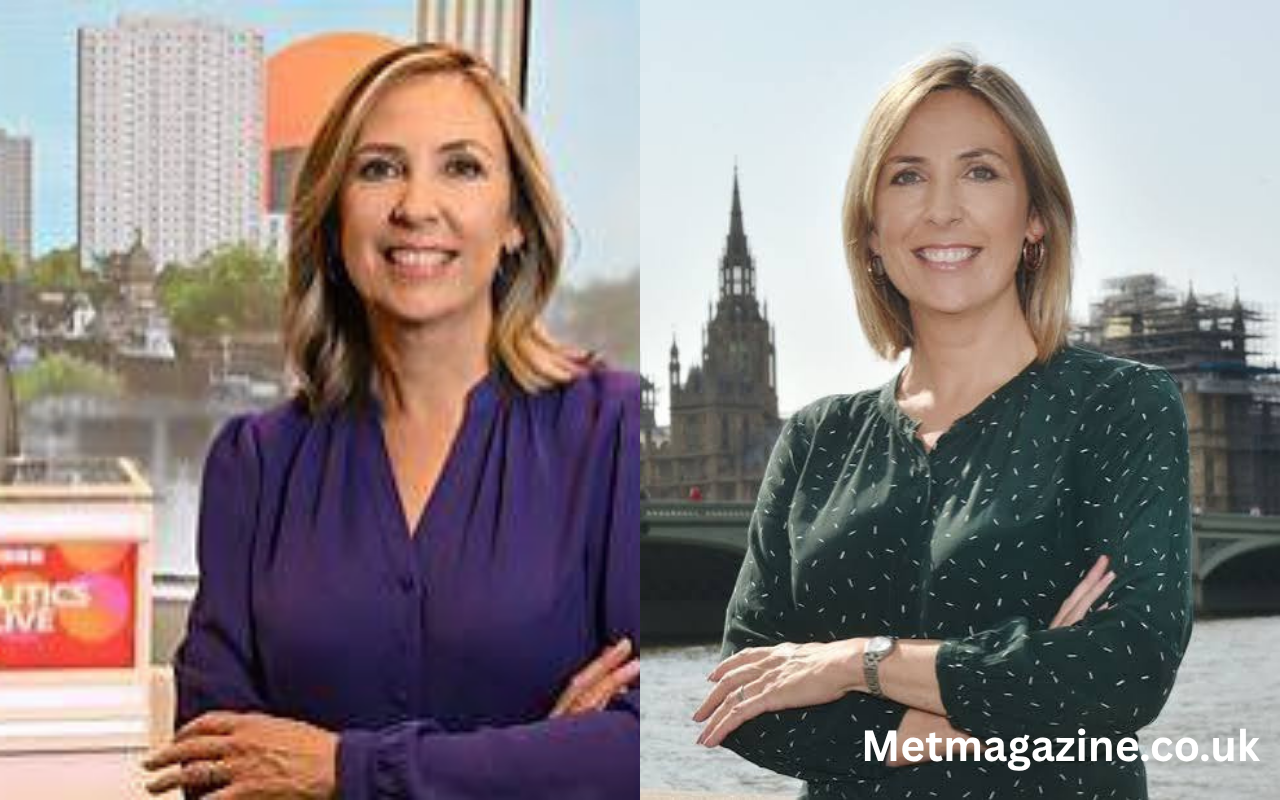
Vicki Young has spent more than two decades reporting from one of the most demanding environments in British journalism: Westminster. While many political stories disappear from the headlines within hours, Young has built a career around understanding the developments behind those headlines and explaining them to millions of BBC viewers and listeners. From her early work in regional journalism to senior positions at BBC News, she has gradually become one of the broadcaster’s recognizable political voices.
Her career is especially notable because it has developed through experience rather than celebrity. Young has covered general elections, political leadership contests, Brexit, the coronavirus pandemic and numerous major political events, building expertise across television and radio along the way. In 2020, she became BBC News’ Deputy Political Editor, and in 2025 she added another major responsibility when she became the permanent presenter of Politics Live.
Vicki Young Quick Facts
| Category | Details |
|---|---|
| Full name | Vicki Young |
| Born | 1971 |
| Age | Approximately 55 in 2026 |
| Nationality | British |
| Profession | Journalist, broadcaster and political editor |
| Employer | BBC News |
| Current role | Deputy Political Editor, BBC News |
| Television role | Presenter of Politics Live |
| Education | Truro High School for Girls; New Hall, Cambridge |
| School achievement | Head Girl in 1988 |
| Early BBC role | Reporter at BBC Wales |
| Chief Political Correspondent | 2015–2020 |
| Deputy Political Editor | 2020–present |
| General elections covered | Eight, according to BBC material published in 2025 |
| Husband | Rae Stewart, journalist, died in 2023 |
| Children | Two |
| Parents | Not reliably documented publicly |
| Siblings | Not reliably documented publicly |
| Net worth | Not publicly verified |
| Known social media | X/Twitter: @BBCVickiYoung |
| No reliably verified public account identified | |
| No reliably verified public profile identified |
Who Is Vicki Young?
Vicki Young is a British political journalist and broadcaster who has spent much of her professional life covering British politics for the BBC. Her work has taken her from regional reporting to the heart of Westminster, where she has followed governments, opposition parties, elections, parliamentary disputes and major political turning points. She currently combines her senior editorial responsibilities as Deputy Political Editor with her broadcasting role on Politics Live.
One of the defining characteristics of Young’s career is its breadth. She has worked in television and radio and has appeared across BBC political programming. Before reaching senior editorial positions, she worked as a political correspondent and also spent time as a BBC Breakfast correspondent. Those different assignments gave her experience in both detailed political reporting and the faster-paced world of mainstream broadcast news.
Young’s importance within British political journalism comes partly from her longevity. Westminster is an environment where political alliances, government priorities and public debates can change quickly, but Young has remained part of the BBC’s political reporting operation through several political eras. Her accumulated experience allows her to place current developments within a much broader historical and political context.
Early Life and Family Background
Vicki Young was born in England in 1971. Public information about her childhood is relatively limited, but her educational background provides some insight into her early development. She attended Truro High School for Girls and completed her time there in 1988, serving as Head Girl during her senior years.
Her connection with Cornwall is an important part of the publicly documented story of her early years. Moving from a school environment in Cornwall toward Cambridge and eventually into national journalism represents a significant geographical and professional journey. It is also an example of how a career in journalism can begin far away from the political institutions that later become central to a reporter’s working life.
Details about Young’s parents, siblings and wider childhood family circumstances have not been extensively documented by reliable sources. That absence is worth acknowledging rather than filling with assumptions. Young has generally maintained a distinction between her professional identity and her private life, meaning that most reliable information about her focuses on journalism, education and broadcasting rather than family history.
Education and Cambridge Experience
After leaving Truro High School for Girls, Young attended New Hall at Cambridge, an institution that is now known as Murray Edwards College. Her Cambridge education provided an academically demanding foundation before she entered professional journalism.
A strong educational background can be particularly useful in political reporting because Westminster journalism requires more than simply following daily headlines. Reporters need to understand legislation, political institutions, public policy, party structures and the historical background behind current disputes. They also have to process large quantities of information and identify what matters to audiences.
Young’s later career demonstrates how those analytical skills were combined with practical reporting experience. Her path was not simply from university into a senior political role. Instead, she developed through regional journalism and increasingly specialized political assignments, gaining the practical knowledge required to work under the pressure of live broadcasting and breaking news.
How Vicki Young Started Her BBC Career
Young began her BBC career as a reporter at BBC Wales before moving toward Westminster and national political journalism. That regional beginning gave her the opportunity to develop the fundamentals of reporting: finding stories, interviewing people, checking information and communicating clearly with audiences.
She subsequently joined the parliamentary team at Westminster and became a political correspondent for the BBC’s One O’Clock News. This was an important transition because Westminster reporting places journalists close to the centre of national decision-making. Political correspondents have to follow developments in Parliament while also understanding how those developments affect people beyond Westminster.
Her early career illustrates a gradual professional progression. Rather than becoming known solely because of one major story, Young accumulated experience across different BBC roles. Over time, that experience established her as a journalist capable of handling both political detail and the demands of television reporting.
Vicki Young and BBC Breakfast
From 2008 to 2011, Young worked as a correspondent for BBC Breakfast. The role gave her additional exposure to one of the BBC’s most prominent television news programmes and helped broaden her experience beyond specialist Westminster reporting.
Morning television requires journalists to explain important developments quickly and clearly. Audiences may not have followed a political story closely before turning on the television, so reporters have to provide enough background to make the issue understandable without overwhelming viewers. Young’s experience in this environment strengthened another important part of her broadcasting skill set.
The BBC Breakfast years also demonstrated her versatility. Political journalists may be expected to work across several formats, including live television, recorded reports, interviews and radio discussions. Young’s career continued in that direction, with her later work involving BBC News, political programmes and radio broadcasting.
Becoming Chief Political Correspondent
A major milestone arrived in 2015, when Young became BBC News’ Chief Political Correspondent. The promotion reflected the level of political experience she had developed during her years covering Westminster.
As Chief Political Correspondent, Young was responsible for reporting on major political developments and regularly appearing across BBC platforms. The role placed her at the centre of coverage involving government decisions, party politics, elections and political leadership.
The position also demanded speed and accuracy. Political stories can change dramatically within minutes, particularly during election campaigns, parliamentary votes or leadership crises. A correspondent working at this level needs to establish reliable sources, understand political strategy and communicate developing information without losing sight of what is confirmed.
Covering General Elections and Major Political Events
Election coverage has been one of the most important elements of Young’s career. BBC material announcing her Politics Live appointment in 2025 stated that she had covered eight general elections as well as numerous international summits.
General elections provide an unusually demanding test for political broadcasters. Journalists have to follow campaign promises, party strategy, opinion polling, constituency battles and leadership performances while also explaining the broader significance of the election. Election night itself adds another level of pressure because results arrive continuously and audiences expect immediate interpretation.
Young’s experience across multiple elections has therefore contributed significantly to her reputation. Covering successive election cycles allows a journalist to see how political parties evolve, how campaign techniques change and how voters respond to different political circumstances. It also provides historical perspective that becomes particularly valuable when Britain enters another period of political uncertainty.
Reporting on Brexit and the Coronavirus Pandemic
Young’s career has coincided with some of the most politically significant events in recent British history. BBC material about her appointment as Politics Live presenter specifically highlighted her reporting on complex stories including Brexit and the coronavirus pandemic.
Brexit created an unusually complicated reporting environment because it involved domestic politics, European institutions, trade, constitutional questions and major divisions within political parties. For journalists, explaining such developments required more than reporting individual political statements. Audiences needed to understand what negotiations meant, why parliamentary votes mattered and how political decisions could affect the country.
The coronavirus pandemic presented a different but equally challenging situation. Political decisions were closely connected to public policy and everyday life, while information changed rapidly. Young’s experience during this period formed part of the broader body of political reporting that helped audiences follow government decisions and the political debates surrounding them.
Becoming BBC Deputy Political Editor
In October 2020, Young became the BBC’s Deputy Political Editor, succeeding John Pienaar. At the time of the appointment, she was already serving as Chief Political Correspondent.
The promotion was an important recognition of her experience within Westminster journalism. The Deputy Political Editor role is not simply another reporting assignment. It involves senior editorial responsibility and requires a detailed understanding of the political landscape, the news agenda and the BBC’s approach to covering major political developments.
When her appointment was announced, BBC Westminster leadership highlighted the clarity Young brought to political reporting as well as her wealth of Westminster experience. Young also described political journalism as a privilege and responsibility, emphasizing the need to explain complex times clearly and fairly.
Vicki Young Becomes Politics Live Presenter
In April 2025, the BBC announced that Young would become the new presenter of Politics Live, replacing Jo Coburn. She began the permanent role in June 2025.
The move represented a natural progression because Young already had extensive experience presenting and reporting political news. Politics Live requires a presenter to manage conversations involving politicians, journalists and commentators while ensuring that important issues are examined from different perspectives.
Young described the appointment as an opportunity to discuss key political issues with panellists and politicians while also holding them to account. Her comments reflected the balance required by the programme: allowing guests to make their arguments while ensuring that claims are questioned and relevant issues are explored.
Vicki Young’s Journalism Style and Reputation
Young’s professional reputation has developed around political knowledge, clarity and experience. In a field where political reporting can become highly dramatic, the ability to provide context is particularly important. Viewers need to know not only what a politician has said but also why that statement matters.
Her experience across television and radio has also helped her adapt her communication style to different audiences. A live television programme requires a different approach from a detailed political report or a radio discussion. The underlying requirement, however, remains the same: accuracy, context and clear communication.
Her longevity at the BBC is another important part of her professional standing. Remaining a senior political journalist for many years requires continuous adaptation. Political journalism has changed dramatically with the growth of social media, 24-hour news and increasingly rapid political communication, and Young has continued working at the centre of that changing environment.
Vicki Young’s Personal Life and Marriage
Although Young keeps much of her personal life private, it is publicly known that she was married to journalist Rae Stewart. The pair met through their professional connections in Westminster and had two children. Stewart also had an extensive journalism and communications career.
Stewart died in June 2023 at the age of 56 after cancer. His professional life included journalism, government communications and writing. His death was a significant personal event for Young and her family, although she has generally maintained privacy around her personal circumstances.
The limited amount of information Young shares about her private life is consistent with her overall public profile. Unlike entertainment personalities who may make family life part of their public brand, Young’s professional identity is overwhelmingly connected with journalism and political reporting.
Family Life and Privacy
Young and Stewart had two children, but their children have not been turned into public figures through their mother’s career. Reliable public sources provide relatively little information about them, and that privacy has largely been maintained.
This separation between professional and personal life is particularly understandable for a political journalist. Young regularly covers public figures whose private lives can become part of political stories, but she has largely avoided making her own family life a subject of public discussion.
As a result, readers looking for detailed information about her children, parents or siblings may find that credible information simply is not available. A responsible biography should distinguish between established facts and online speculation, particularly when discussing people who are not themselves public figures.
Vicki Young’s Net Worth and Salary
There is no officially verified public figure for Vicki Young’s personal net worth. Some websites publish estimated wealth figures for journalists, but those numbers generally cannot be confirmed through reliable financial records. It would therefore be misleading to present a precise net-worth figure as fact.
Her primary known professional income comes from her long BBC career, including senior editorial and broadcasting positions. She has worked for the BBC for more than 25 years, and her current responsibilities as Deputy Political Editor and Politics Live presenter place her firmly among the broadcaster’s experienced political journalists.
It is important to separate salary from net worth. Salary represents employment income, whereas net worth can include property, investments, savings, pensions and other assets. Without access to Young’s private financial information, a precise calculation is impossible. For that reason, claims of a specific multi-million-pound fortune should be treated cautiously unless supported by authoritative evidence.
Vicki Young on Social Media
Social media has become an important part of modern political journalism, and Young has a professional presence on X, formerly known as Twitter, under the handle @BBCVickiYoung. Her online identity is primarily connected to political reporting and BBC-related work rather than personal lifestyle content.
For journalists working in Westminster, X can be particularly useful because politicians, political parties, journalists and institutions frequently use the platform to communicate breaking developments. A political correspondent can follow statements in real time while also directing audiences toward verified reporting.
There is less reliable evidence for other personal social-media accounts. Searches for Instagram and LinkedIn can produce profiles belonging to different people with the same name, so those accounts should not automatically be attributed to the BBC journalist. Keeping this distinction clear helps prevent mistaken identity.
Recent Career and Current Work
As of 2026, Young continues to work as BBC News’ Deputy Political Editor and presenter of Politics Live. Her move into the programme’s permanent presenting role in 2025 added a major new dimension to a career that had already included senior reporting and editorial responsibilities.
Her continued broadcasting work also demonstrates that her career remains active rather than simply being a record of past achievements. Recent BBC-related material shows her continuing to participate in political programming and analysis, including The Week in Westminster.
Looking ahead, Young’s role is likely to remain closely connected to the major political debates shaping Britain. Her combination of newsroom experience, Westminster knowledge and live broadcasting skills makes her well placed to cover elections, government changes, leadership contests and other major developments as they unfold.
Major Achievements in Vicki Young’s Career
Young’s achievements are perhaps best measured through the positions of responsibility she has earned rather than through a long list of celebrity awards. Becoming Chief Political Correspondent in 2015 marked one major stage, followed by her appointment as Deputy Political Editor in 2020.
Her coverage of eight general elections, international summits and major stories such as Brexit and the coronavirus pandemic represents another significant part of her professional record. These assignments have required extensive preparation, live reporting and the ability to interpret complicated political developments for large audiences.
Her appointment to Politics Live in 2025 represents another important achievement. It placed her in a more visible presenter role while allowing her to draw on decades of political reporting experience. In many ways, the programme brings together the different skills Young has developed throughout her career: interviewing, analysis, political knowledge and live broadcasting.
Why Vicki Young’s Career Is Significant
Vicki Young’s career illustrates how expertise is built over time. She began in regional journalism, moved into Westminster reporting, became a political correspondent, progressed to Chief Political Correspondent and then moved into senior editorial leadership. Each stage added another layer of knowledge and responsibility.
Her career is also significant because political journalism plays an important role in democratic society. Audiences rely on journalists to explain what governments are doing, question politicians and provide context when political claims become difficult to understand. Senior political correspondents therefore occupy an important position between political institutions and the public.
Young’s career demonstrates that influence does not necessarily come from becoming a celebrity. A journalist can become influential through knowledge, reliability and years of professional work. Her continued presence at the BBC shows the value of developing a specialist area of expertise and maintaining credibility over the long term.
Conclusion
Vicki Young’s story is ultimately one of steady professional growth, political expertise and journalistic endurance. From her education at Truro High School for Girls and New Hall, Cambridge, to her early reporting work at BBC Wales and her eventual rise through Westminster journalism, her career has been built step by step rather than overnight.
Her work as Chief Political Correspondent, Deputy Political Editor and now Politics Live presenter has placed her close to many of Britain’s most consequential political events. She has covered multiple general elections, Brexit, the coronavirus pandemic, international summits and countless developments at Westminster.
Perhaps the most valuable lesson from Vicki Young’s career is that lasting professional influence comes from persistence, curiosity and the willingness to keep learning. Political journalism demands accuracy under pressure, the ability to understand opposing arguments and the discipline to separate facts from speculation. Young’s journey demonstrates how those qualities can build a respected career over decades.
As Vicki Young continues to report from Westminster and guide political discussions on Politics Live, her career remains an example of how experience can become a powerful form of expertise. Her journey from regional journalism to the centre of British political broadcasting is a reminder that meaningful success is often built gradually—through dedication, resilience and a genuine commitment to helping people understand the world around them.
